
How Vitamin B Complex Keeps Your Cat Feelin’ Fine
Why B Complex for Cats Matters More Than You Think
B complex for cats is a group of water-soluble vitamins that your cat needs every single day to stay healthy, energized, and mentally sharp.
Here’s a quick summary of what you need to know:
- What it is: Eight essential B vitamins (B1, B2, B3, B5, B6, B7, B9, B12) that work together
- Why cats need it: Supports energy production, nerve function, red blood cell formation, immune health, and healthy skin and coat
- Why daily intake matters: Unlike fat-soluble vitamins, most B vitamins are not stored in the body — they flush out through urine
- Who needs it most: Senior cats, cats with kidney disease, cats on homemade diets, or cats recovering from illness
- Forms available: Liquid, powder, soft chews, or injectable (vet-administered)
- When to see results: Most cats show improved energy and coat condition within 3-4 weeks of consistent use
Cats are strict carnivores. Their bodies are built to pull B vitamins from animal-based foods like meat, fish, and eggs. But here’s the problem — illness, aging, stress, and even the heat used during commercial pet food processing can strip those vitamins away before your cat ever gets them.
That means many cats are quietly running low on nutrients they need every day.
B vitamins don’t just do one thing. They power dozens of processes at once — from converting food into energy, to keeping the nervous system firing correctly, to helping form healthy red blood cells. When levels drop, the effects show up fast: low energy, dull coat, poor appetite, and in serious cases, neurological problems.
The good news? Supplementing is simple, generally very safe, and often makes a noticeable difference.
Why Your Pet Needs a B Complex for Cats
As we look at feline health in April 2026, the importance of metabolic balance has never been clearer. Every purr, pounce, and mid-afternoon zoomie is powered by cellular energy. At the heart of this energy production is the B vitamin family. These nutrients act as essential enzyme cofactors—think of them as the “keys” that unlock the energy stored in proteins, fats, and carbohydrates.

For cats, the stakes are high. Their unique physiology requires a steady stream of B vitamins to support a high-functioning nervous system and the constant renewal of red blood cells. Furthermore, B vitamins are the body’s first line of defense against the physiological toll of stress. Whether it’s a trip to the vet, a move to a new house, or the onset of age-related decline, a robust b complex for cats helps maintain the immune response and metabolic demand.
According to Scientific research on feline dietary requirements, ensuring a complete profile of these water-soluble nutrients is vital because, with the exception of B12, the feline body cannot store them. If they aren’t in the bowl today, they aren’t in the cat’s system tomorrow.
Essential Nutrients in a B Complex for Cats
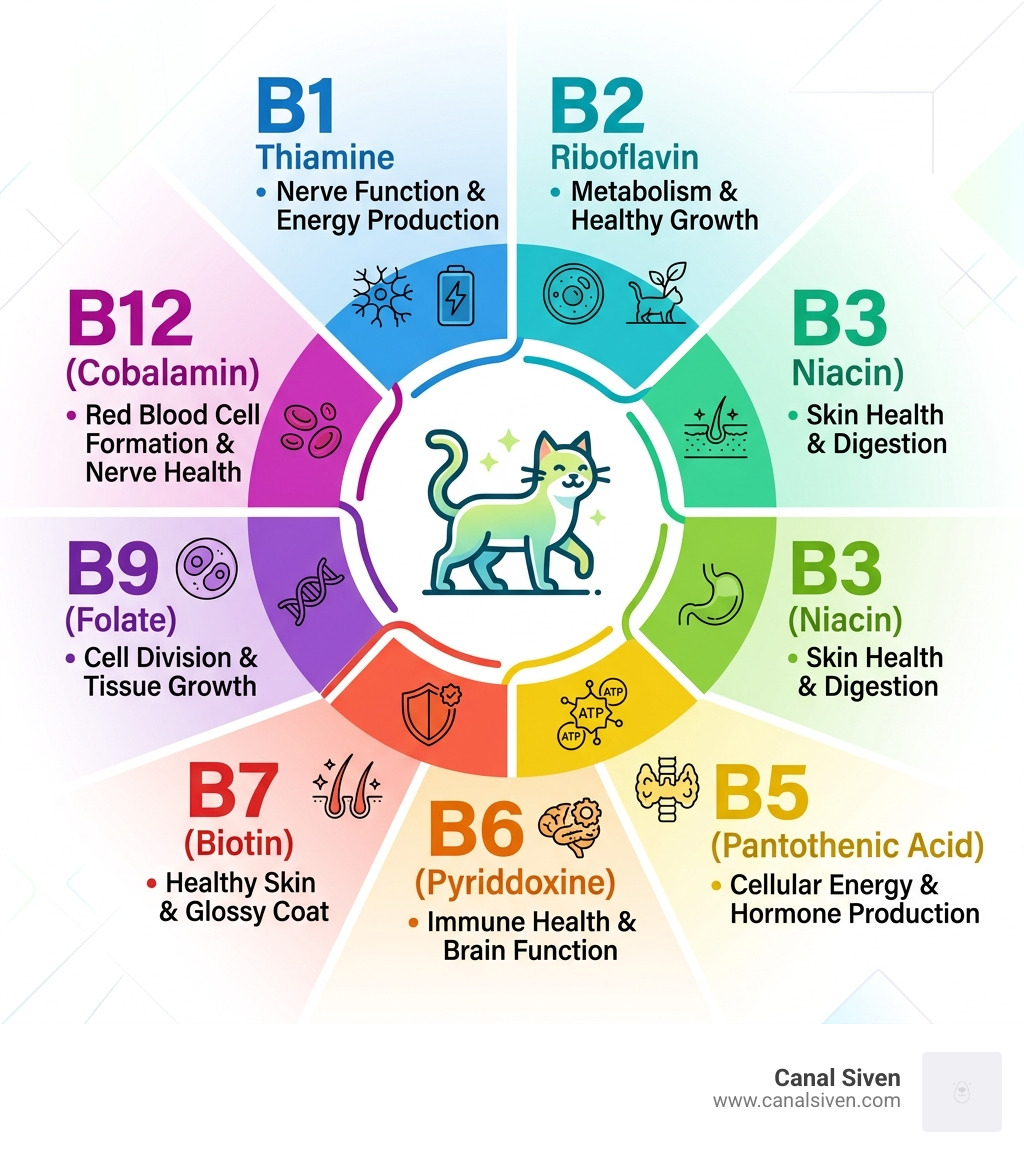
A high-quality complex isn’t just one vitamin; it’s a synergistic team. Here is the roster of the “Big Eight” and what they do for your feline friend:
- Thiamine (B1): The “brain vitamin.” It’s essential for carbohydrate metabolism and maintaining nerve control.
- Riboflavin (B2): Supports fat metabolism and helps keep the skin and eyes healthy.
- Niacin (B3): Vital for circulation, detoxification, and healthy gums.
- Pantothenic Acid (B5): Often called the “anti-stress” vitamin, it supports the adrenal glands.
- Pyridoxine (B6): Crucial for neurotransmitter production and protein metabolism.
- Biotin (B7): The secret to that glossy show-cat coat and healthy claws.
- Folic Acid (B9): Essential for cellular repair and DNA synthesis.
- Cobalamin (B12): The heavy lifter for red blood cell formation and neurological health.
The Critical Role of B12 and B1
While all B vitamins are important, B1 and B12 are the “MVPs” of feline nutrition. Thiamine (B1) is so critical that a deficiency can lead to sudden heart muscle failure or neurological seizures. Because cats have a higher requirement for B1 than many other animals, they are particularly sensitive to its loss during food processing.
Cobalamin (B12) is equally vital, especially for gastrointestinal support and appetite stimulation. Interestingly, B12 absorption is a complex process that relies heavily on a healthy pancreas and upper intestines. This is why B12 is often the first nutrient to dip when a cat experiences digestive upset. It also plays a major role in homocysteine clearance, which supports heart health and cognitive function as cats age.
Recognizing Signs of Vitamin B Deficiency
It can be heartbreaking to see a once-vibrant cat become a “statue” on the sofa. Often, owners mistake the signs of B vitamin deficiency for “just getting old.” However, nutritional gaps can manifest in very specific, physical ways.

The most common red flag is lethargy. If your cat has lost their “spark” or seems confused, their brain might not be getting the cellular energy it needs. Other signs include weight loss despite eating, a dull or thinning coat, and even anemia. In severe cases of B1 deficiency, cats may experience “ventroflexion”—a condition where they cannot lift their head properly—or even seizures.
To help you spot the signs, we’ve broken down the symptoms by vitamin type:
| Vitamin | Primary Deficiency Symptoms in Cats |
|---|---|
| B1 (Thiamine) | Loss of appetite, loss of nerve control, general weakness, seizures |
| B2 (Riboflavin) | Eye abnormalities, poor growth, potential heart failure |
| B3 (Niacin) | Inflamed gums, weight loss, “black tongue” sores |
| B5 (Pantothenic Acid) | Hair loss, diarrhea, gastrointestinal distress |
| B6 (Pyridoxine) | Skin rashes, lesions, anemia, stunted growth |
| B7 (Biotin) | Dry skin, brittle fur, chronic diarrhea |
| B9 (Folic Acid) | Anemia, slow recovery from illness |
| B12 (Cobalamin) | Fatigue, confusion, weight loss, poor immune response |
High-Risk Conditions for Deficiency
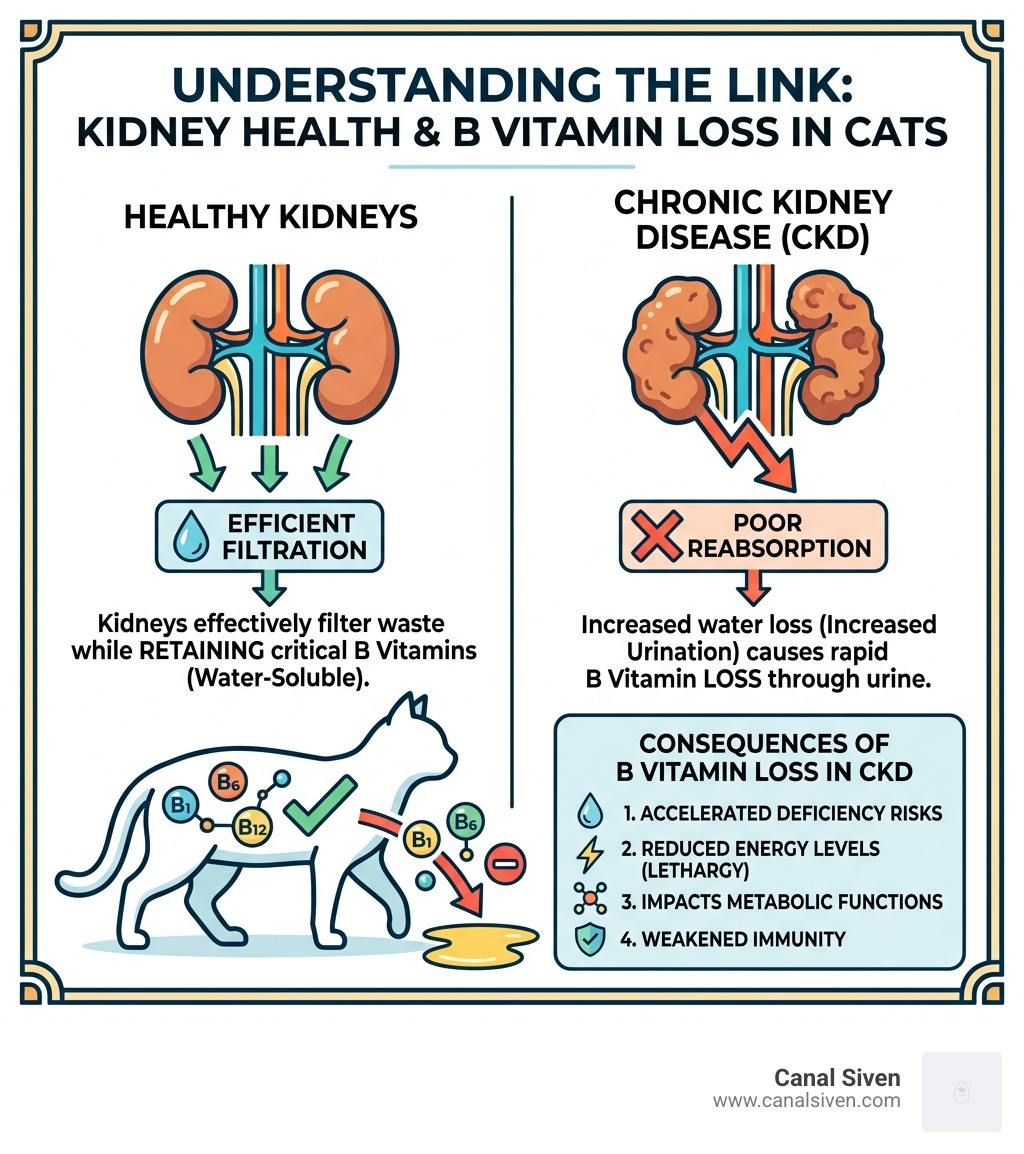
Some cats are more likely than others to need a boost. Cats with Chronic Kidney Disease (CKD) often lose water-soluble vitamins at an accelerated rate due to increased urination. Similarly, conditions like pancreatitis or intestinal lymphoma can shorten the half-life of B vitamins in the body from the usual 13 days down to just 5 days.
Senior cats also face challenges; as they age, their ability to absorb nutrients through the gut wall decreases. If you are a DIY enthusiast providing home-cooked meals, you must be extra vigilant. While homemade diets offer fresh ingredients, they often lack the precise balance of a b complex for cats found in commercial diets. For those looking to bridge these gaps, we provide more info about pet nutrition solutions to help ensure your homemade recipes are truly complete.
Choosing the Right Supplement Format
When you decide to supplement, the “how” is just as important as the “what.” In our experience at Canal Siven, the best supplement is the one your cat will actually take without a fight!
Bioavailability Matters
Not all vitamins are created equal. Some modern supplements use “tissue-ready” or “active” forms of B vitamins (like Methylcobalamin instead of Cyanocobalamin). These are easier for the body to use, especially for cats with liver issues or advanced age. Some high-end options even use organic sources, like quinoa sprouts, where the vitamins are organically bound to the plant matter for superior absorption.
Formats to Consider:
- Oral Liquids: These are often the most bioavailable. Being alcohol-free and glycerin-based, they are fast-absorbing and can be easily mixed into wet food or dropped directly into the mouth.
- Powders: Great for multi-cat households. A simple half-scoop of a concentrated powder can be stirred into a communal meal.
- Soft Chews: Ideal for the “treat-motivated” cat. These often include other beneficial ingredients like amino acids or antioxidants.
- Injections: Usually reserved for cats with severe malabsorption issues (like IBD or pancreatitis). These are administered by a vet (or at home with training) to bypass the digestive tract entirely.
How to Administer a B Complex for Cats
Consistency is the secret sauce. Because B vitamins are flushed out daily, skipping a week can reset the progress you’ve made.
- The “Slow Reveal”: If using a powder or liquid with a strong natural scent (B vitamins can sometimes smell a bit “earthy” or like yeast), start with a tiny drop and work your way up to the full dose over 7 days.
- Mixing is Key: Most cats won’t notice a liquid supplement if it’s mixed into a “stinky” food like sardines or a high-quality wet pâté.
- Daily Routine: Administer the supplement at the same time every day—perhaps during the morning feeding—to ensure it becomes a habit for both you and your cat.
Frequently Asked Questions about Feline B Vitamins
Can cats overdose on B vitamins?
The beauty of water-soluble vitamins is their safety profile. Because they are not stored in fat cells, any excess is typically expelled through the urine. This makes a true “overdose” very rare. However, there are two caveats: extremely high doses of B6 (Pyridoxine) over a long period can lead to muscle weakness, and rapid IV administration by a professional can sometimes trigger vomiting. Generally, if you follow the label instructions, the risk is minimal.
How long does it take to see results?
While every cat is different, you can usually expect to see a “brightening” of their personality—more energy and better appetite—within just a few days. For physical changes like a shinier coat, reduced shedding, or improved skin condition, it typically takes a 3-4 week timeline of consistent daily use. This allows time for new, nutrient-rich fur to grow and for cellular levels to stabilize.
Can I give my cat human B complex supplements?
We strongly advise against this. Human supplements are formulated for a 150-lb mammal, not a 10-lb cat. More importantly, human vitamins often contain “inactive” ingredients that are toxic to felines. The most dangerous is Xylitol, a sweetener that causes rapid liver failure in pets. Always choose a product specifically labeled for veterinary use to ensure the dosage and ingredients are safe for feline biology.
Conclusion
At Canal Siven, we believe that smart living extends to every member of your family—including the ones with whiskers. Managing your pet’s health is a long-term investment in their wellness and your happiness. By understanding the vital role of a b complex for cats, you are taking a proactive step toward preventing chronic illness and ensuring your cat feels their best well into their senior years.
Whether you are looking for tailored pet nutrition solutions or financial insights for a better lifestyle, we are here to help you make informed decisions. A healthy cat is a happy cat, and a happy cat makes for a very happy home.
For more tips on feline wellness and balanced nutrition, visit us at https://www.canalsiven.com/.
