
Stop Pussyfooting Around Breed Specific Cat Food
Is Breed Specific Cat Food Actually Worth It?
Breed specific cat food is cat food formulated to match the unique physical traits, metabolism, and health needs of a particular breed — rather than cats in general.
Here’s a quick breakdown to answer the core question:
| Factor | Breed Specific Food | Standard Premium Food |
|---|---|---|
| Kibble shape | Tailored to jaw structure | One-size-fits-all |
| Nutrient profile | Adjusted for breed traits | General life-stage focus |
| Coat/joint support | Breed-targeted ingredients | General formula |
| Price | Higher (e.g., ~$1.80/100g) | Lower to comparable |
| Necessary for all cats? | No — but beneficial for some | Suitable for most cats |
The short answer: Breed specific food can offer real benefits for purebred cats with distinct physical traits — think flat-faced Persians, giant Maine Coons, or lean athletic Bengals. But for many cats, a high-quality standard diet works just fine.
There are 40 internationally recognised cat breeds, each shaped by genetics into very different bodies. A Maine Coon can weigh three times more than the average cat. A Persian can’t even pick up a standard kibble the same way a Siamese can — their flat faces and jaw structures are that different.
That’s the core idea behind breed specific cat food. Not every cat is the same, so why feed them all the same food?
But here’s the tension: is the science solid, or is it mostly clever marketing?
That’s exactly what this guide cuts through — so you can make a smart, confident choice for your cat without wasting money or second-guessing yourself.
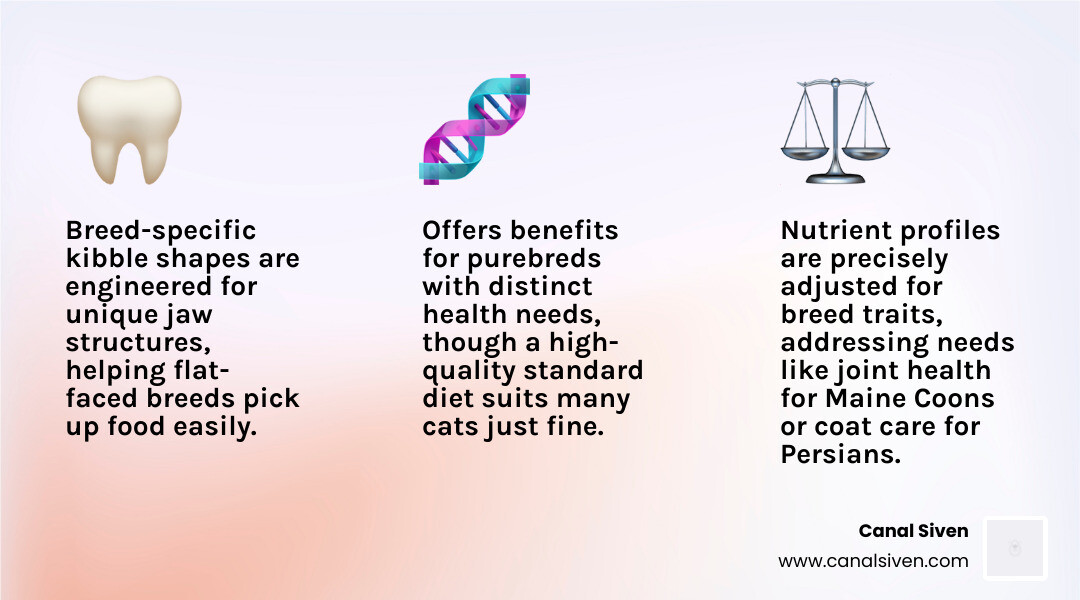
The Science Behind Breed Specific Cat Food
When we look at feline physiology, it is easy to assume that “a cat is a cat.” However, from a nutritional standpoint, the precision required for a 10kg Maine Coon differs significantly from that of a svelte 3kg Siamese. The science behind breed specific cat food relies on matching nutrient density to the specific metabolic energy requirements and life stages of these diverse animals.
Most commercial cat foods are formulated to meet AAFCO (Association of American Feed Control Officials) standards for either “Growth and Reproduction” or “Adult Maintenance.” While these standards ensure a cat won’t suffer from deficiencies, they don’t always account for the unique predispositions of purebred cats. For example, Persian Adult Dry Cat Food is designed with a specific focus on skin health and hairball management, recognizing that this breed’s long, dense undercoat leads to significant hair ingestion during grooming.
Scientific research into breed-specific needs often focuses on how different cats process nutrients. A Bengal cat, known for its high activity levels and athletic physique, requires a higher protein-to-fat ratio to maintain muscle mass compared to a more sedentary breed. Furthermore, certain breeds have different “prehension” methods—the way they pick up food. Brachycephalic (flat-faced) breeds often use the underside of their tongue to lap up kibble, a factor that standard round kibble doesn’t accommodate.
Nutritional Requirements for Purebred Giants and Elegants
The “one size fits all” philosophy is rapidly becoming a thing of the past in the pet food industry. We have seen that tailoring a diet to coat length, activity levels, and physique can have a profound impact on a cat’s long-term well-being.
Nutritional Profiles of Breed Specific Cat Food for Large Breeds
Maine Coons are the heavyweights of the cat world. Because they are three times heavier than the average domestic cat, their joints bear a massive amount of stress. Breed specific cat food for Maine Coons often includes enriched levels of glucosamine and chondroitin for joint support, alongside EPA and DHA (omega-3 fatty acids) to maintain bone density and heart health.
With a calorie density of approximately 3846 kilocalories of metabolizable energy (ME) per kilogram, these formulas provide the concentrated energy a large-framed cat needs without requiring them to eat excessive volumes of food, which helps in weight management. Taurine is also a critical inclusion, as large breeds can be more prone to cardiac issues like hypertrophic cardiomyopathy.
When to Choose Breed Specific Cat Food Over Standard Kibble
Choosing a breed-specific formula over standard kibble is often a matter of addressing specific “pain points” for certain breeds:
- Siamese Digestion: Siamese cats often have sensitive digestive systems. They benefit from highly digestible proteins (L.I.P.) and prebiotics that support a balanced intestinal flora.
- Bengal Energy: With their wild ancestry, Bengals are incredibly energetic. Their food requires a high protein content (often 38% or higher) to support their well-muscled condition.
- Ragdoll Growth: These “gentle giants” have a long growth period. They need a balance of nutrients that supports steady bone development rather than rapid, unhealthy weight gain.
- Hairball Prevention: For long-haired breeds like the Persian or Ragdoll, a complex blend of fibers, including psyllium husk, is used to stimulate intestinal transit, helping swallowed hair pass through the digestive tract rather than forming problematic hairballs.
Kibble Engineering: Solving the Brachycephalic Puzzle
One of the most fascinating aspects of breed specific cat food isn’t just what is inside the food, but the shape of the food itself. This is known as “kibble engineering.”
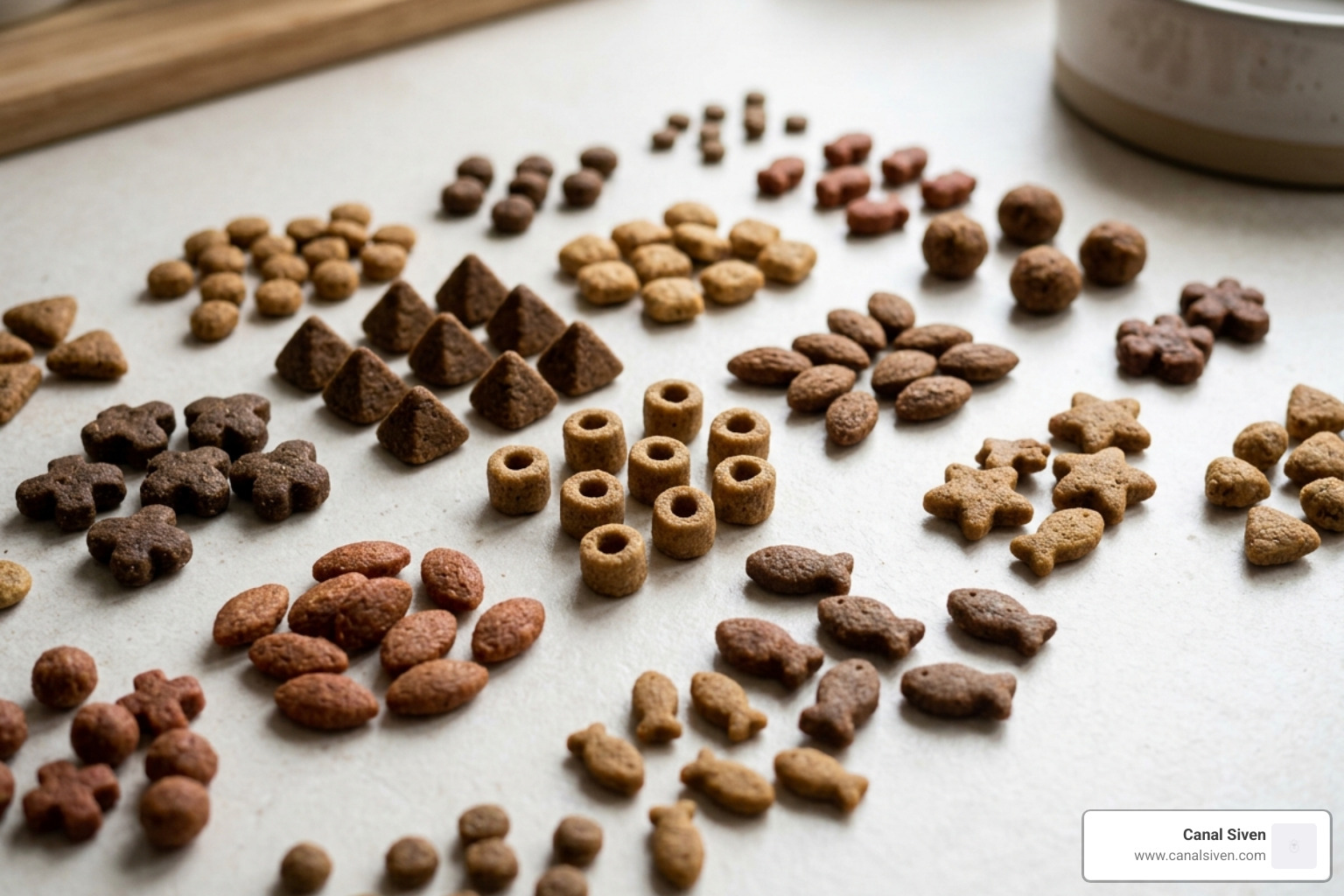
For many purebred cats, the shape of the kibble determines whether they can actually eat it efficiently.
- The Persian (Almond-shaped): Because of their brachycephalic jaw, Persians struggle to pick up round or square kibble. An almond-shaped kibble is easier for them to “hook” with the underside of their tongue.
- The Ragdoll (Pyramid-shaped): Ragdolls have broad jaws. A large, pyramid-shaped kibble encourages them to chew rather than swallow whole, which is vital for dental health and slowing down fast eaters.
- The Siamese (Tube-shaped): Siamese cats have long, narrow muzzles. A cylindrical or tube-shaped kibble is easier for their specific jaw structure to grasp and crunch.
This engineering also serves a medical purpose: dental health. Specialized shapes can act like a “toothbrush,” scraping away plaque and reducing tartar as the cat bites down. Since many purebreds are prone to dental issues, this mechanical cleaning is a significant benefit.
Marketing Gimmick or Medical Necessity?
In April 2026, the price of premium cat food is a major consideration for any household. We have observed that breed-specific options, such as those for British Shorthairs or Persians, often retail for around $180.19 NZD for a 10kg bag (approximately $1.80 per 100g). This is a noticeable step up from standard supermarket brands.
Is it just marketing hype? Critics often argue that a high-quality “all-breed” grain-free food can provide the same nutrients at a lower cost. However, the value lies in the convenience of the combination. While you could buy separate joint supplements, hairball pastes, and dental treats, breed specific cat food bundles these targeted benefits into one bag.
| Cat Food Type | Cost per 100g (Approx) | Targeted Benefits | Tailored Kibble? |
|---|---|---|---|
| Standard Premium | $1.20 – $1.50 | General health | No |
| Breed Specific | $1.80 – $2.60 | Breed-specific health | Yes |
| Veterinary Prescription | $2.50 – $4.00 | Disease management | Sometimes |
While not a “medical necessity” in the way a prescription kidney diet is, these foods are a proactive health tool. If you own a breed with known predispositions—like the heart-prone Maine Coon or the hairball-prone Persian—the higher cost now might save you on veterinary bills later.
Veterinary Perspectives and Homemade Alternatives
Most veterinarians recommend a diet based on the individual cat’s health status rather than just their breed. However, they do acknowledge that breed-specific formulas from reputable manufacturers are high-quality options that meet strict nutritional profiles.

If you find commercial options too expensive or want more control, some owners turn to homemade diets. However, we must emphasize that creating a balanced cat diet at home is incredibly difficult. Cats have very specific requirements for taurine, calcium, and phosphorus.
For those choosing the homemade route, it is essential to:
- Establish a VCPR: A Veterinarian-Client-Patient Relationship is necessary to get professional advice tailored to your cat’s medical history.
- Use Nutrient Balancers: If you are cooking fresh meat, you must use a vitamin and mineral supplement designed for feline homemade recipes to avoid dangerous deficiencies.
- Consult a Nutritionist: Board-certified veterinary nutritionists can help create recipes for cats with complex needs, such as those with both a breed predisposition and a medical condition like diabetes.
Frequently Asked Questions about Breed Specific Cat Food
Is breed-specific food necessary for mixed-breed cats?
Strictly speaking, no. Mixed-breed cats (the beloved “moggies”) usually do perfectly well on high-quality life-stage diets (Kitten, Adult, or Senior). However, if your mixed-breed cat has a very specific trait—like the long fur of a Persian or the massive size of a Maine Coon—they might still benefit from the specific fiber or joint-support profiles found in those breed-specific bags.
How much more expensive is breed-specific food in 2026?
As of April 2026, you can expect to pay a 20% to 40% premium for breed-specific formulas compared to standard high-quality kibble. For example, while a standard 4kg bag might cost $60-$70, a breed-specific 4kg bag (like Siamese) can reach upwards of $100.
Can I mix breed-specific wet and dry foods?
Absolutely! In fact, we recommend “mixed feeding.” Combining breed-specific dry kibble (for dental health) with breed-specific wet food (for hydration) offers the best of both worlds. This is particularly important for breeds like the Siamese or Bengal, who need high protein levels and plenty of moisture to support urinary tract health.
Conclusion
Navigating feline nutrition doesn’t have to be a game of cat and mouse. While breed specific cat food carries a premium price tag, the science behind its kibble engineering and targeted nutrient profiles offers genuine value for owners of certain purebred cats. Whether it’s protecting a Maine Coon’s joints or helping a Persian eat more comfortably, these diets are more than just a marketing trend—they are a tool for smarter, healthier living.
At Canal Siven, we believe that making informed financial and lifestyle choices for your pets is the key to a long and happy life together. By weighing the costs against the specific needs of your cat’s breed, you can stop pussyfooting around the aisles and choose the nutrition that truly fits.
