
The Ultimate Guide to Raw Cat Food
What Is Raw Cat Food — and Is It Right for Your Cat?
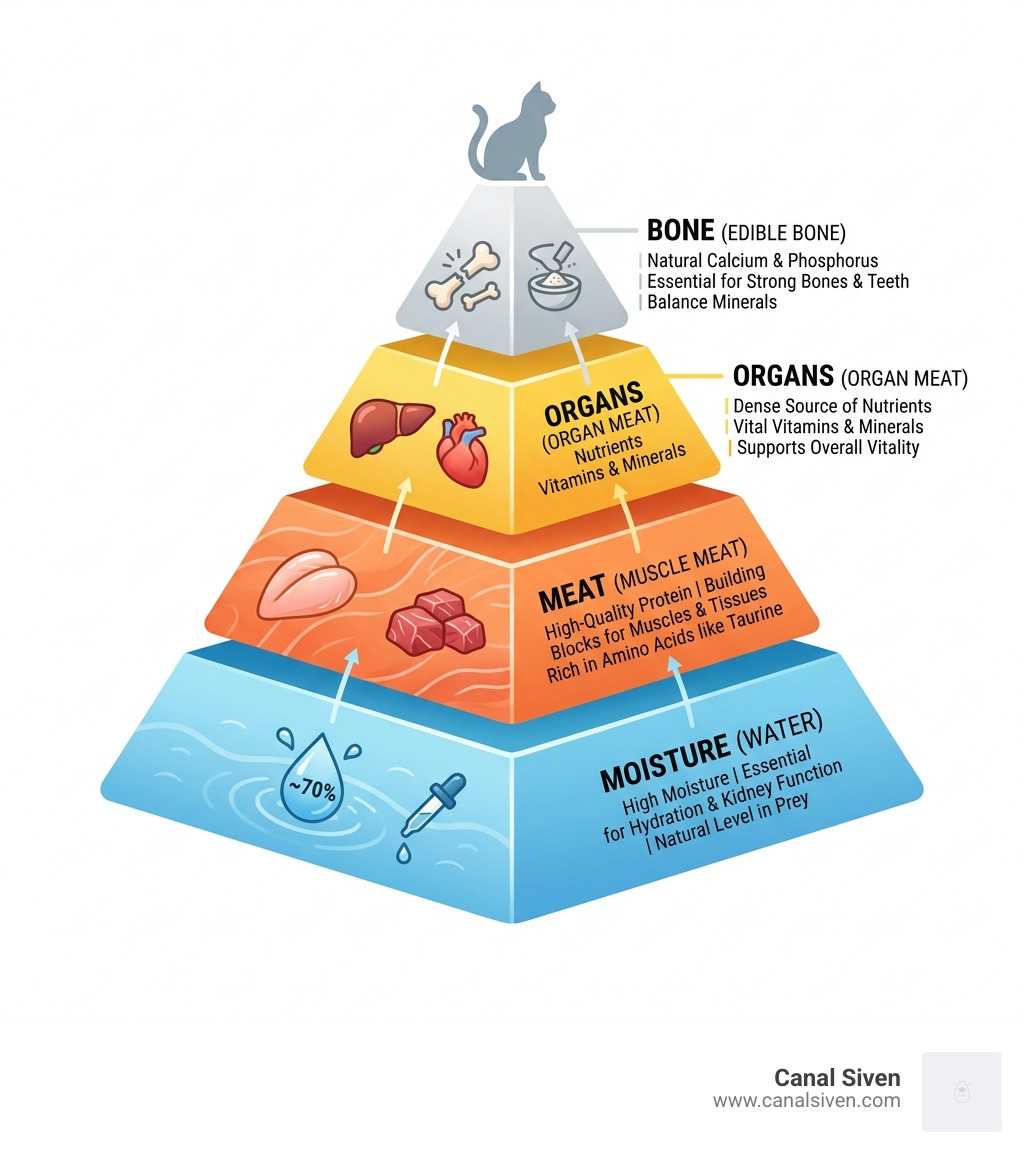
Raw cat food is exactly what it sounds like: uncooked meat, organs, and bone fed to cats as their primary diet.
Here’s a quick summary of what you need to know:
- What it is: Minimally processed meals made from raw muscle meat, organ meat, and ground bone — designed to mirror what cats eat in the wild
- Who it’s for: Cats of all life stages, from kittens to seniors
- Main formats: Frozen patties, freeze-dried nuggets, raw-coated kibble, and premix powders you add to fresh meat
- Key benefit: High moisture content (~70%), dense protein, and preserved natural enzymes
- Safety: Reputable brands use deep-freezing, pathogen testing, and AAFCO-compliant formulas
- Cost: Roughly $2.50 per day for an average 10 lb cat, depending on brand and format
Cats are obligate carnivores. That means their bodies are built to get nutrients from animal tissue — not grains, not vegetables, not heavily processed kibble. Unlike dogs, cats cannot synthesize certain nutrients (like taurine) on their own. They must get them from meat.
Yet most commercial cat food is cooked at high heat, which destroys enzymes and can degrade sensitive nutrients. Dry kibble has only about 12% moisture, while a cat’s natural prey — like mice — is roughly 70% water. That gap matters for kidney health, urinary function, and overall hydration.
Raw diets aim to close that gap. They bring food closer to what cats evolved to eat: fresh, whole, moist, and protein-dense.
That said, raw feeding isn’t one-size-fits-all. The format you choose, the brand you trust, and how you transition your cat all make a big difference. This guide covers everything you need to make a confident, informed decision.
Understanding Raw Cat Food vs. Traditional Diets
When we look at the cat food aisle in April 2026, the options can feel overwhelming. To understand why raw cat food has gained so much traction, we have to compare it to the “big two”: kibble and canned wet food.
The biggest differentiator is heat. Traditional kibble and canned foods are cooked at high temperatures to ensure shelf stability. While this makes storage easy, the “kill step” of high heat can alter the molecular structure of proteins and destroy delicate enzymes and vitamins. Raw cat food, by contrast, is either frozen or freeze-dried, preserving the natural nutrient density of the ingredients.
Hydration is the other major factor. Cats have a low thirst drive because they evolved to get their water from their prey.
| Feature | Raw Food | Wet/Canned Food | Dry Kibble |
|---|---|---|---|
| Moisture Content | ~70% | >80% | ~12% |
| Processing | Minimal/None | High Heat/Pressure | Ultra-Processed |
| Enzymes | Intact | Destroyed | Destroyed |
| Average Daily Cost | ~$2.50 | ~$1.50 – $4.00 | ~$0.50 – $1.00 |
| Shelf Life | 14-18 months (frozen) | 24 months | 12-18 months |
As we move through 2026, shipping logistics have made raw feeding more accessible than ever. Most premium raw brands now utilize sophisticated cold-chain delivery, shipping frozen meals in insulated, recyclable packaging that keeps the food at sub-zero temperatures until it reaches your doorstep. While the cost is higher than a bag of bargain kibble, many owners find the investment pays off in lower veterinary bills over the cat’s lifetime.
The Health Benefits of a Raw Cat Food Diet

Transitioning to raw cat food isn’t just a trend; it’s about biological appropriateness. When we feed cats what they were designed to eat, we often see a “glow-up” that starts from the inside out.
Digestive Efficiency and Stool Quality
One of the first things owners notice — and let’s be honest, it’s a favorite benefit for humans — is the change in the litter box. Because raw meat is highly bioavailable, the cat’s body absorbs almost all of it. This results in smaller, firmer, and significantly less-smelly stools. Since there are no heavy “fillers” like corn or soy, there is simply less waste to eliminate.
Dental Health and Natural Enzymes
In the wild, cats clean their teeth by shearing through muscle meat and crushing small bones. Many raw cat food recipes include finely ground bone, which acts as a gentle abrasive. Furthermore, raw meat contains natural enzymes that help break down biofilm and tartar on the teeth, promoting healthier gums and fresher breath.
Vitality and Longevity
Research into feline nutrient requirements highlights the necessity of amino acids like taurine for heart and eye health. Raw diets are naturally rich in these compounds. Anecdotal evidence from long-term raw feeders, such as those using ancestral-style premixes, shows cats consistently living into their late teens and even 20s with high energy levels and lean muscle mass.
Weight and Allergy Management
Because raw cat food is naturally low in carbohydrates, it helps regulate metabolism and prevents the insulin spikes that lead to obesity and diabetes. For cats with “mystery” skin itches or chronic ear infections, a raw diet often provides relief by removing the artificial dyes, preservatives, and grains found in processed foods.
Nutritional completeness for all life stages
A common myth is that raw food is just “meat in a bowl.” To be healthy, a diet must be “complete and balanced.” This means it must meet AAFCO (Association of American Feed Control Officials) standards for vitamins, minerals, and the calcium-phosphorus ratio.
Most high-quality raw brands use a “95% meat, bone, and organ” ratio, with the remaining 5% consisting of essential supplements like kelp, fish oil, or manganese. Whether you are feeding a growing kitten or a senior cat, ensure the label specifies it is formulated for “all life stages.” You can find more scientific research on raw meat based diets for cats to understand the complex nutrient interactions involved.
Raw feeding for specific health issues
For cats facing chronic conditions, raw nutrition can be a powerful tool:
- Kidney Disease: While a vet should always be consulted, some raw diets offer high-quality, highly digestible protein with controlled phosphorus levels.
- IBD and Sensitive Stomachs: The lack of thickeners (like carrageenan or guar gum) in raw food can soothe inflamed digestive tracts.
- Allergies: Many raw brands offer “novel proteins” like rabbit, venison, or duck, which are excellent for cats who have developed sensitivities to common proteins like chicken or beef.
Types of Raw Nutrition and How to Choose
Choosing the right format depends on your lifestyle and your cat’s preferences. At Canal Siven, we believe in tailoring nutrition to the individual.
- Frozen Raw (Nuggets, Patties, Sliders): This is the gold standard for freshness. It’s usually sold in pre-portioned nuggets or patties. You simply thaw the daily portion in the fridge and serve.
- Freeze-Dried Raw: These are shelf-stable and great for travel. You can feed them dry as a treat, but for a full meal, you should always rehydrate them with water, bone broth, or raw goat milk to ensure your cat gets necessary moisture.
- Raw-Coated Kibble: This is a “bridge” food. It’s high-quality kibble tumbled in freeze-dried raw coating. It’s a great way to start if you aren’t ready for a 100% raw diet.
- Premixes and Homemade Completers: If you prefer to source your own human-grade, USDA-inspected meat from a local butcher, you can use a “completer” powder. These powders contain the necessary vitamins, minerals, and taurine to turn plain meat into a balanced meal.
If you’re unsure which path to take, you can find more info about pet nutrition services on our main site to help narrow down the best protein rotation for your “picky eater.”
Safe Handling and Transitioning to Raw Cat Food

Safety is the number one concern for new raw feeders. However, if you can safely handle a raw chicken breast for your own dinner, you can safely feed your cat.
The Transition Schedule
Never switch your cat’s food “cold turkey” unless specifically advised by a professional. Cats have sensitive stomachs and can be “imprinted” on the texture of kibble. We recommend a 10-to-14 day transition:
- Days 1-3: 75% old food, 25% raw.
- Days 4-7: 50% old food, 50% raw.
- Days 8-10: 25% old food, 75% raw.
- Day 11+: 100% raw cat food.
Portions and Calorie Counts
An average 10 lb adult cat usually needs about 2-4 oz of raw food twice a day. However, calorie density varies. For example, some complete recipes provide about 1802 kcal/kg (roughly 51 kcal per ounce). Always monitor your cat’s body condition score; you should be able to feel their ribs but not see them.
Hygiene Best Practices
- Thawing: Thaw frozen food in the refrigerator, never on the counter.
- The 2-Hour Rule: Raw food should not sit out for more than 2 hours. If your cat hasn’t finished it by then, pick it up and toss it.
- Bowls: Use stainless steel, glass, or ceramic bowls. Plastic can develop microscopic scratches that harbor bacteria.
- Clean Up: Wash all surfaces and utensils with hot, soapy water after feeding.
Addressing safety concerns and bacteria
You might worry about Salmonella or Listeria. A cat’s physiology is different from ours. They have very high levels of hydrochloric acid in their stomachs and a much shorter digestive tract, which allows them to process raw meat quickly before bacteria can colonize.
Reputable brands also use safety hurdles:
- Deep-Freezing: Holding meat at -10°F for at least 10 days kills most parasites.
- HPP (High-Pressure Processing): Some brands use cold-water pressure to eliminate pathogens without heat.
- Bacteriophaging: An innovative method using natural “phages” to target specific bacteria like Salmonella while leaving beneficial bacteria intact.
Frequently Asked Questions about Raw Feeding
Is raw cat food safe for kittens?
Yes! In fact, introducing raw cat food early can prevent them from becoming “kibble addicts.” Kittens have high energy and growth requirements, so they may need 3-4 feedings a day. Ensure the food is labeled for “growth” or “all life stages” to support their skeletal development.
How do I balance a homemade raw diet?
Unless you are a veterinary nutritionist, do not try to “wing it” with just meat and liver. Use a validated recipe builder or a high-quality vitamin premix. These ensure your cat gets the exact ratio of calcium, phosphorus, and taurine they need to thrive.
Can I cook raw cat food recipes?
If your cat is hesitant about the cold texture, you can “gently cook” the food by searing the outside of the meat. However, never cook recipes that contain ground bone, as cooked bone becomes brittle and dangerous. Also, be aware that high heat destroys the taurine your cat needs for heart health.
Conclusion
At Canal Siven, we believe that smart living extends to every member of your family — including the ones with whiskers. Choosing raw cat food is an investment in your cat’s long-term vitality and a commitment to their biological heritage as true carnivores.
By prioritizing human-grade ingredients, safe handling, and tailored nutrition, you can help your cat achieve a level of health that simply isn’t possible on a diet of ultra-processed grains. Ready to see the difference for yourself? Start your journey to better pet health with us today and discover how species-appropriate feeding can transform your cat’s life.
