
Bone Up on Nutrition: Preventing Mineralization Issues in Dogs
Why Bone Density Dog Nutrition Matters More Than Most Owners Realize
Bone density dog nutrition is one of the most important — and most overlooked — parts of keeping your dog healthy for the long haul.
Quick answer: The key nutrients for canine bone density are:
| Nutrient | Why It Matters |
|---|---|
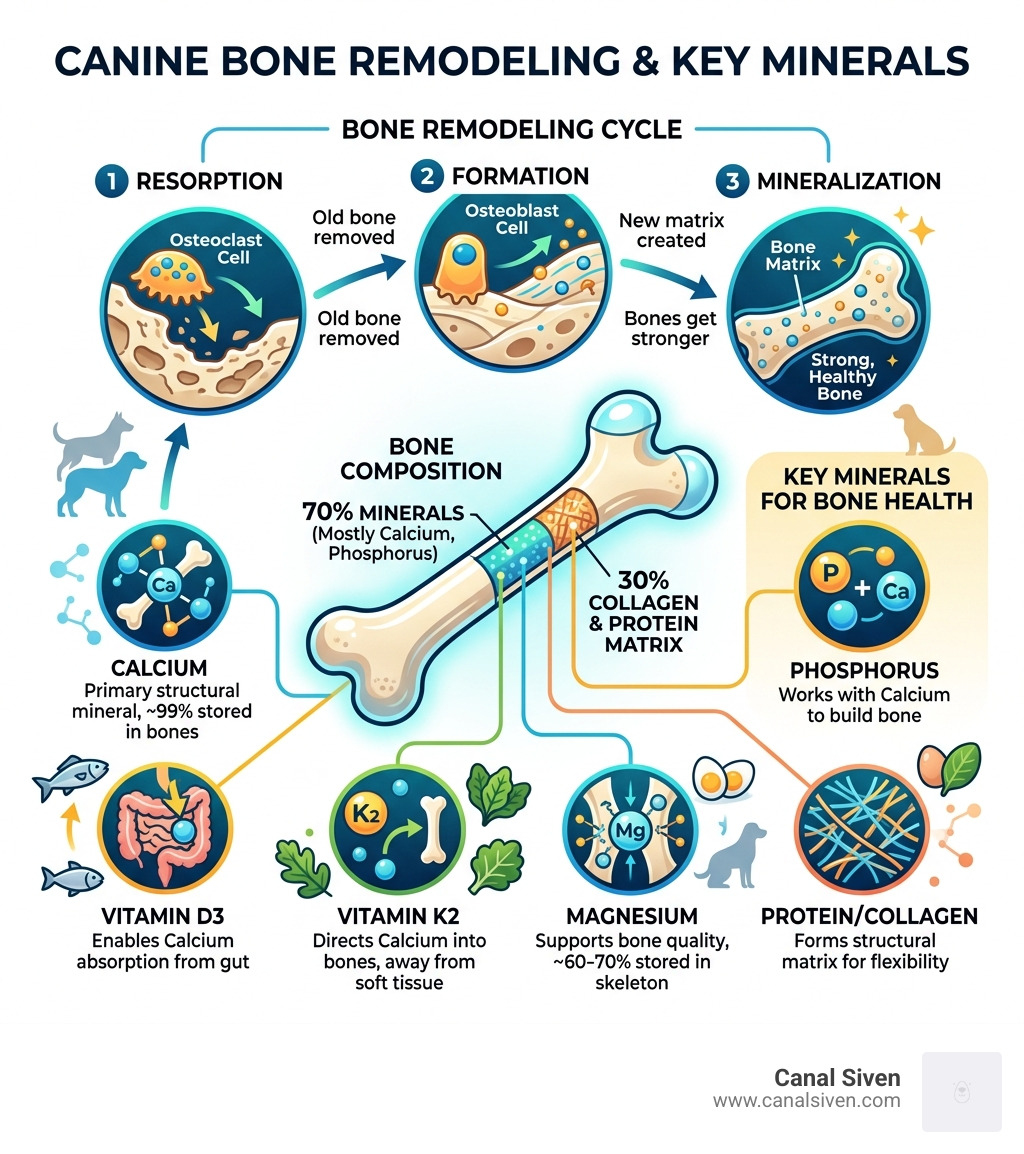
| Calcium | Primary mineral in bone structure (~99% stored in bones and teeth) |
| Phosphorus | Works with calcium; ~85% found in bones and teeth |
| Vitamin D3 | Enables calcium absorption from the gut |
| Vitamin K2 | Directs calcium into bones, not soft tissue |
| Magnesium | ~60-70% stored in the skeleton; supports bone quality |
| Protein/Collagen | Forms ~30% of bone mass as structural matrix |
Bones are not just passive scaffolding. They are living tissue — constantly being broken down and rebuilt in a process called remodeling. About 70% of bone is mineral (mostly calcium and phosphorus), and the other 30% is collagen and protein matrix that gives bone its flexibility and strength.
When the right nutrients are missing — or out of balance — that process breaks down.
The results can be serious. Puppies can develop rickets or skeletal deformities. Adults can lose bone density quietly over time. Senior dogs can face painful fractures or joint deterioration. In fact, one long-term study found that metabolic bone disease can shorten a dog’s lifespan by an average of 1.8 years.
The good news? Most of this is preventable through diet.
This guide walks you through exactly what your dog needs, at every life stage, to build and maintain strong, healthy bones.
Essential Nutrients for Bone Density Dog Nutrition
When we think about bones, we usually think about calcium. While calcium is the “heavy lifter,” it’s part of a complex biological team. Without its teammates, calcium can’t do its job properly. In our work at Canal Siven, we emphasize that bone density dog nutrition is about synergy, not just individual minerals.

The Core Players
- Calcium and Phosphorus: These two minerals form hydroxyapatite, the crystal structure that makes bones hard.
- Vitamin D3: Dogs are unique. Unlike humans, they cannot synthesize enough Vitamin D from sunlight. They are almost entirely dependent on their diet for this hormone-like vitamin, which is essential for absorbing calcium from the intestines. According to Scientific research on Vitamin D and canine bone health, a deficiency can lead to secondary hyperparathyroidism, where the body steals calcium from the bones to keep blood levels stable.
- Magnesium: About 60–70% of a dog’s magnesium resides in the skeleton. It’s the “forgotten” mineral that helps regulate the quality of the bone crystals and supports the collagen matrix.
- Protein and Collagen: Bone is roughly 30% collagen and matrix proteins. This provides the “mesh” that minerals stick to. Without enough high-quality protein, bones become brittle rather than strong.
The Builders: Osteoblasts
Think of osteoblasts as the construction crew of the skeletal system. They produce the “osteoid,” a protein-rich matrix that later mineralizes. To help these cells work, dogs need trace minerals like Zinc, Manganese, and Boron. Boron, in particular, is gaining attention for its ability to enhance bone healing and improve the utilization of magnesium and calcium.
The Biochemical Role of Vitamin K2
If Vitamin D3 is the usher that brings calcium into the body, Vitamin K2 is the traffic cop that tells it where to go. Vitamin K2 activates a protein called osteocalcin, which binds calcium to the bone matrix.
Without K2, calcium can end up in places it doesn’t belong—like the arteries or soft tissues (arterial calcification). While not as commonly discussed as Vitamin D, K2 is vital for long-term bone density dog nutrition. Natural sources include fermented foods like natto or certain cheeses, though many high-quality supplements now include it to ensure proper mineral direction.
Trace Minerals and Bone Matrix Strength
While needed in tiny amounts, trace minerals act as catalysts for bone strength:
- Manganese: Essential for the synthesis of glycosaminoglycans (GAGs) found in bone and cartilage.
- Silicon: Helps in the early stages of bone calcification and increases the rate of mineralization.
- Copper: Vital for cross-linking collagen and elastin, which gives bone its tensile strength (the ability to resist breaking under tension).
The Critical Calcium-to-Phosphorus Ratio
In bone density dog nutrition, balance is everything. Calcium (Ca) and Phosphorus (P) are chemically “linked.” If you have too much of one, the body cannot use the other effectively.
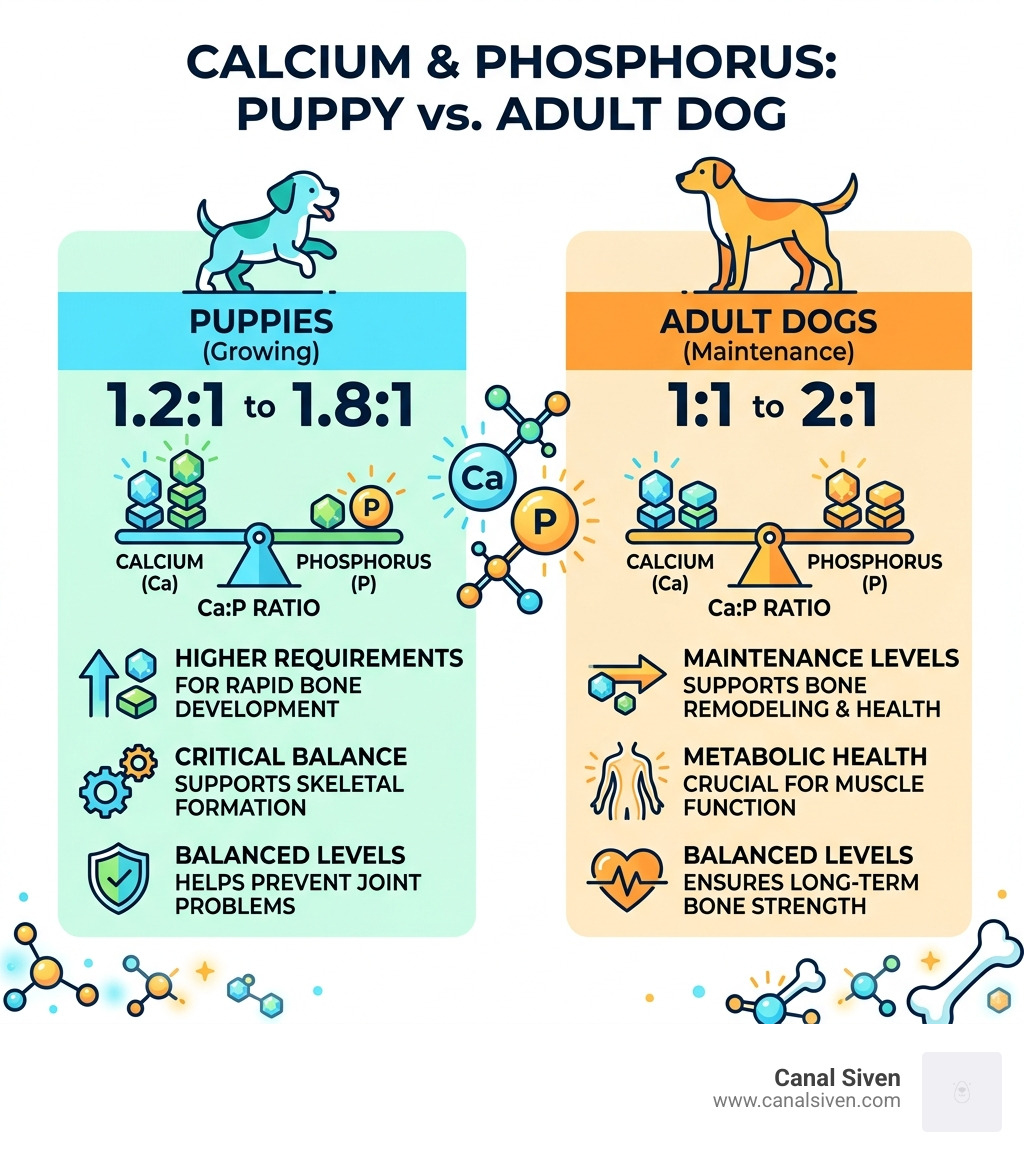
For most adult dogs, the ideal Ca:P ratio is between 1:1 and 2:1.
Why the Balance Shifts
If a dog is fed an “all-meat” diet without bone or supplementation, they receive massive amounts of phosphorus but almost no calcium. This triggers the parathyroid gland to pull calcium out of the bones to keep the heart and muscles working. This leads to Nutritional Secondary Hyperparathyroidism, effectively turning the skeleton into a hollow shell.
Conversely, some plant-based ingredients contain phytates or oxalates. These are “anti-nutrients” that bind to calcium in the gut, making it impossible for the dog to absorb. This is why we often recommend mineral sources with high bioavailability, such as seaweed-derived minerals, which aren’t as easily blocked by these plant compounds.
Risks of Calcium Imbalance
- Rickets: Primarily seen in growing puppies with severe Vitamin D or calcium deficiency, leading to soft, bowed bones.
- Osteomalacia: The adult version of rickets, where bones soften and become prone to “pathologic fractures”—breaks that happen during normal, everyday movement.
- Puppy Deformities: In large breeds, even a slight excess of calcium can be just as dangerous as a deficiency, leading to permanent joint damage.
Life Stage Requirements: From Puppies to Seniors
A dog’s nutritional needs aren’t static; they evolve as the dog moves from the rapid growth of puppyhood to the maintenance of adulthood and the metabolic shifts of senior age.

Optimizing Bone Density Dog Nutrition for Puppies
Puppies are not just small dogs—they are bone-building machines. They require roughly double the calcium concentration of adults (around 100 mg per kg of body weight).
However, large breed puppies (those expected to be over 55 lbs as adults) are uniquely vulnerable. Unlike adults, puppies under six months of age cannot “turn off” calcium absorption in their gut. If you overfeed calcium, they absorb it all. This can lead to Developmental Orthopedic Disease (DOD), including:
- Hypertrophic Osteodystrophy (HOD): Painful swelling of the growth plates.
- Hip Dysplasia: Accelerated by rapid growth and excess weight.
The goal for large breeds is controlled growth. We want them to reach their genetic size slowly. This often means a slightly lower Ca:P ratio (around 1.2:1) and strict energy restriction to prevent them from getting too heavy too fast.
Maintaining Bone Density Dog Nutrition in Senior Dogs
As dogs age, their ability to absorb nutrients declines. We also see a rise in sarcopenia (muscle loss), which puts more strain on the bones.
For seniors, the challenge is often kidney disease. Since the kidneys process phosphorus, a senior dog with renal issues may need a diet lower in phosphorus. This makes traditional bone meal tricky, as it contains both minerals. In these cases, we look for purified calcium sources (like calcium carbonate) that don’t add extra phosphorus to the system. Bioavailability becomes the top priority to ensure the aging gut can actually utilize what it’s given.
Natural Sources and Supplementation Safety
At Canal Siven, we believe that whole-food sources often provide the best results because they come with natural co-factors. However, safety is paramount.
Seaweed-Derived Calcium (Lithothamnium calcareum)
One of the most impressive natural sources is calcified seaweed. Unlike limestone-based calcium, seaweed calcium has a unique, porous “honeycomb” structure. This makes it highly bioavailable. It typically contains:
- 30–34% elemental calcium
- 2–4% magnesium
- 70+ trace minerals (including boron and manganese)
Eggshell Powder
Eggshells are approximately 95% calcium carbonate. One teaspoon of finely ground eggshell powder provides about 800–1,000 mg of calcium. It is an excellent, low-phosphorus way to balance a home-prepared diet that doesn’t include raw bones.
Raw Meaty Bones and Bone Broth
- Raw Meaty Bones (RMBs): These provide the perfect natural Ca:P ratio (about 1.4:1). However, they carry risks of tooth fractures or GI obstructions. Never feed cooked bones, as they becomes brittle and splinter.
- Bone Broth: While great for joint health and collagen, bone broth is actually quite low in calcium and phosphorus. It’s a wonderful “topper” for hydration and amino acids, but shouldn’t be relied upon as a primary mineral source.
Safe Use of Bone Meal and Alternatives
Bone meal is a traditional supplement, but it requires caution. Because bones act as a “sink” for heavy metals, some bone-derived supplements have been found to contain lead. A Study on heavy metals in bone-derived supplements highlights the importance of sourcing.
When using bone meal, always:
- Request a Certificate of Analysis (COA) to check for lead, mercury, and arsenic.
- Ensure it is dietary grade, not garden grade (which may contain fertilizers or pesticides).
- Monitor for constipation—excess calcium can lead to hard, chalky, white stools.
When to Use Bone Health Supplements
If your dog is eating a “complete and balanced” AAFCO-approved commercial food, they likely don’t need extra calcium. In fact, adding it could be harmful. However, supplements are recommended if:
- You are feeding a home-prepared diet (essential!).
- Your dog has a diagnosed deficiency or malabsorption issue.
- You are supporting a senior dog with Omega-3 fatty acids (EPA and DHA) from marine sources like fish oil, which help reduce the inflammation that can degrade bone and joint health.
Lifestyle Factors: Exercise and Weight Control
Nutrition provides the building blocks, but exercise provides the blueprint.
Wolff’s Law and Bone Remodeling
There is a principle in biology called Wolff’s Law: bone grows or remodels in response to the forces or demands placed upon it. This means that weight-bearing exercise—like walking or light hiking—is essential for maintaining bone density dog nutrition. The physical stress of movement signals the osteoblasts to lay down more mineral, making the bone denser.
The Danger of Obesity
While exercise is good, excess weight is the enemy of skeletal health. Obesity creates a “double whammy”:
- Physical Strain: It puts massive pressure on joints and growth plates.
- Inflammation: Fat tissue produces inflammatory cytokines that can actually speed up bone resorption (breakdown).
We recommend keeping your dog at a Body Condition Score (BCS) of 4 or 5 out of 9. You should be able to feel their ribs easily without a thick layer of fat covering them. For dogs with existing bone issues, low-impact activities like swimming are fantastic for maintaining muscle and bone health without the “pounding” of pavement.
Frequently Asked Questions about Canine Bone Health
What are the signs of poor bone density in dogs?
Symptoms can be subtle before they become severe. Watch for:
- Stiff gait or limping (especially after rest).
- Bowed legs or splayed paws in puppies.
- Reluctance to jump or climb stairs.
- Recurrent fractures from minor trips or falls.
- Bone pain (your dog may flinch when certain areas are touched).
Can I give my dog human calcium supplements?
We generally advise against this unless specifically directed by a vet. Human supplements often contain Vitamin D levels that are toxic to dogs, or they may contain Xylitol (a sweetener that is deadly to canines). Furthermore, the dosages are formulated for a 150lb human, making it very easy to accidentally overdose a 30lb dog.
Is garden-grade bone meal safe for dogs?
No. Never feed garden-grade bone meal. It is processed differently and is not held to food-safety standards. It may contain high levels of heavy metals, microbial contaminants, or even added chemicals like fertilizers that are toxic if ingested. Only use supplements labeled specifically for pet or human consumption.
Conclusion
Building skeletal longevity is a marathon, not a sprint. By focusing on a balanced Ca:P ratio, ensuring your dog has the necessary co-factors like Vitamins D3 and K2, and maintaining a lean body weight, you are giving your companion the best chance at a mobile, pain-free life.
At Canal Siven, we believe that every meal is an opportunity to strengthen your dog’s foundation. Whether you are choosing the best commercial kibble or balancing a home-cooked feast, bone density dog nutrition is the bedrock of their vitality.
Tailored pet nutrition solutions for healthier living are just the beginning. Proactive wellness starts today—so your dog can keep running, jumping, and playing for years to come.
