
Is an All Protein Diet for Dogs Actually Healthy?
Is an All-Protein Diet for Dogs Actually Healthy?
Protein and dogs go hand in hand — it’s one of the most essential nutrients your dog needs to survive and thrive. But with high-protein diets trending and pet food labels boasting impressive protein percentages, many owners are left wondering: how much is enough, and can there be too much of a good thing?
Here’s a quick answer to the most common questions:
| Question | Quick Answer |
|---|---|
| Do dogs need protein? | Yes — it’s essential for muscles, immunity, skin, coat, and more |
| How much protein do adult dogs need? | At least 18% on a dry matter basis (AAFCO minimum) |
| Do puppies need more protein? | Yes — at least 22.5% (dry matter basis) |
| Is high protein dangerous for healthy dogs? | Generally no, but very high levels can shift gut bacteria and metabolism |
| What’s the best protein source? | High-quality animal proteins like chicken, beef, fish, and eggs |
| Can dogs eat an all-protein diet? | No — dogs are omnivores and need a balanced diet |
Protein is made up of amino acids — the building blocks your dog’s body uses every day. Dogs need 22 amino acids in total, and 10 of those must come from food because their bodies can’t produce them. Without enough dietary protein, a dog’s body will start breaking down its own muscle tissue to meet basic needs.
But the story doesn’t end at “more is better.” Research shows that very high protein diets can shift gut microbiome composition and increase certain metabolites linked to inflammation and kidney stress — even in healthy dogs.
This guide breaks down what the science actually says, what the right amount looks like for your dog’s life stage, and how to read a label without getting misled.
The Essential Role of Protein and Dogs’ Biological Needs
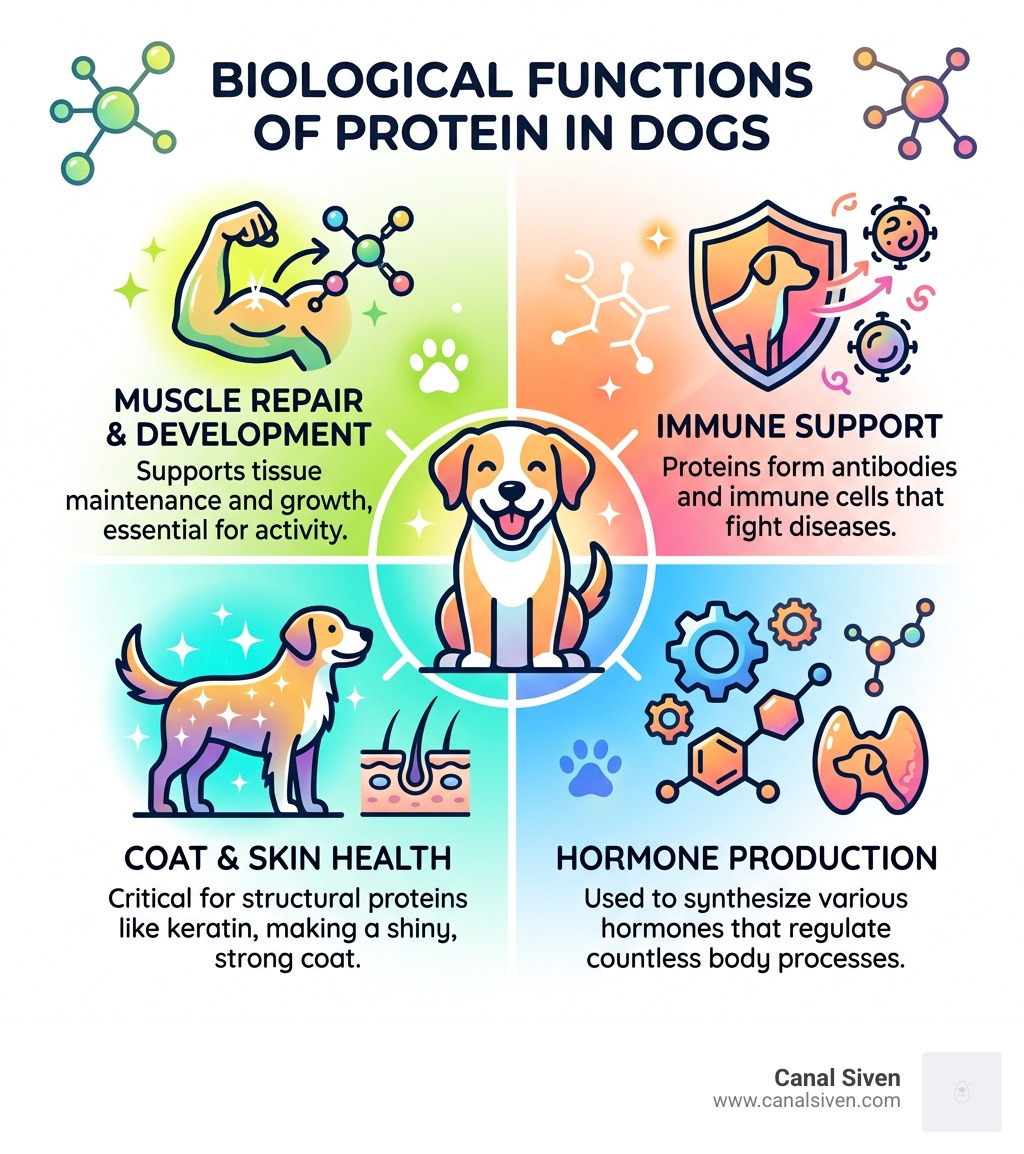
When we talk about protein and dogs, we are talking about the very machinery of life. Every time your dog chases a ball, heals a small scratch, or grows a winter coat, they are using protein. Unlike fats or carbohydrates, which the body can store away for a rainy day, proteins are in a constant state of “turnover.” Amino acids are used up daily, and if they aren’t replaced through the diet, the body begins a process of “cannibalization,” pulling protein from the dog’s own muscles to keep vital organs running.

Protein serves several non-negotiable roles:
- Muscle Maintenance: It builds and repairs the lean tissue that allows for movement and stability.
- Immune System Support: Antibodies, which fight off viruses and bacteria, are actually specialized proteins.
- Hormone and Enzyme Production: These chemical messengers regulate everything from digestion to mood.
- Structural Integrity: Keratin (for nails and hair) and collagen (for skin, tendons, and ligaments) are all protein-based.
As noted in this expert look at Pondering Pet Protein: How much protein should my pet get?, the quality of these proteins is just as important as the quantity. A dog’s body doesn’t just need “protein”; it needs a specific profile of essential amino acids that are highly bioavailable.
How Much Protein and Dogs Require by Life Stage
The amount of protein a dog needs isn’t a “one size fits all” number. It shifts dramatically as they age. The Association of American Feed Control Officials (AAFCO) sets the minimum standards that most commercial foods follow, but “minimum” doesn’t always mean “optimal.”
For a healthy adult dog, the AAFCO minimum is 18% on a dry matter basis. However, many veterinarians suggest that 22% to 28% is a more thriving range for the average pet. Puppies, on the other hand, are building an entire skeletal and muscular system from scratch. They require a minimum of 22.5%, though many high-quality puppy foods reach 30% or higher.
One of the biggest myths we encounter is that senior dogs should eat less protein to “protect their kidneys.” In reality, healthy seniors often need more protein — up to 50% more than younger adults — to combat sarcopenia (age-related muscle loss).
| Life Stage | AAFCO Minimum (Dry Matter) | Recommended Range |
|---|---|---|
| Puppy (Growth) | 22.5% | 25% – 30% |
| Adult (Maintenance) | 18.0% | 22% – 28% |
| Senior (Healthy) | 18.0% | 24% – 32% |
| Pregnant/Nursing | 22.5% | 25% – 35% |
Signs of Insufficient Protein and Dogs’ Health
What happens when the balance is off? Protein deficiency can be subtle at first, but it eventually leads to visible health declines. We often see “red flags” in the coat first — it becomes dry, brittle, or begins to thin out.
Other signs include:
- Muscle Wasting: You might notice your dog’s spine or hip bones becoming more prominent even if their weight seems stable.
- Lethargy: Without enough protein to support metabolic enzymes, dogs often lose their “spark.”
- Edema: In severe cases, low protein levels in the blood can cause fluid to leak into the abdomen (fluid buildup).
- Stunted Growth: In puppies, a lack of amino acids can lead to permanent developmental issues.
In some cases, a dog might be eating enough protein but losing it through their intestines due to a condition called Protein-Losing Enteropathy (PLE). This is a serious medical issue that requires immediate veterinary intervention.
Optimal Requirements: AAFCO Standards and Life Stages
To truly understand protein and dogs, we have to look at the “Dry Matter Basis.” If you look at a can of wet food and see “8% protein,” it might look lower than a bag of kibble at “24%.” But because the wet food is 80% water, the actual protein density (the dry matter) might be closer to 40%.

As of April 2026, the consensus among nutritional experts is that we should be feeding for the dog’s specific lifestyle:
- Active and Working Dogs: Police dogs, herding dogs, and agility athletes have massive “repair” needs. These dogs thrive on 28% to 35% crude protein. Feeding them high-quality protein within 1–2 hours after intense exercise can significantly improve muscle recovery.
- Gestation and Lactation: A nursing mother is essentially a protein factory. She requires nutrient-dense food with at least 25% to 30% protein to support her own body while producing milk for a litter.
- The Senior Shift: As mentioned, unless a senior has advanced kidney disease, they need high-quality, easily digestible protein to keep their muscles strong. Aiming for protein to make up about 25% of their daily calories is a common benchmark for healthy aging.
Can Dogs Have Too Much Protein? Risks and Research
In the quest for “the best,” many owners have pushed protein levels to the extreme, sometimes exceeding 40% or 50% for sedentary pets. While healthy dogs are excellent at processing excess protein (they simply break it down and pee out the nitrogen), new research suggests there are hidden trade-offs.
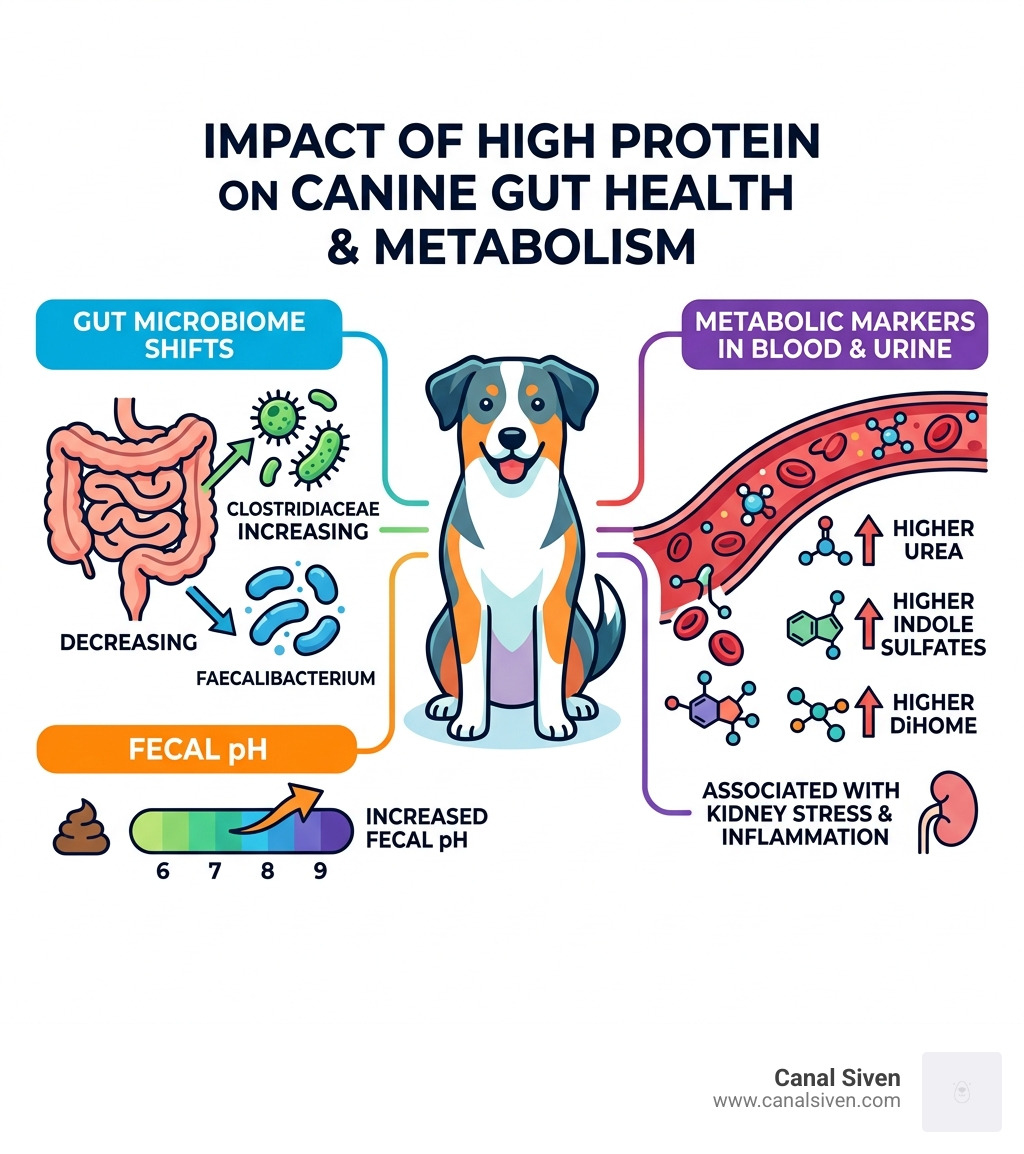
A notable study involving healthy beagles tested low (18.99%), medium (25.34%), and high (45.77%) protein diets. While the dogs remained “clinically healthy,” the high-protein group showed significant changes:
- Microbiome Shifts: The gut bacteria moved toward “proteolysis” (breaking down protein) rather than “saccharolysis” (breaking down fibers). This led to an increase in Clostridiaceae and a decrease in beneficial Faecalibacterium.
- Metabolite Changes: Scientists found higher levels of urea, indole sulfates, and DiHOME — markers often associated with kidney stress and inflammation — in the blood and urine of the high-protein group.
- Fecal pH: The pH of the stool increased, which can alter the gut environment and reduce the production of beneficial short-chain fatty acids.
Furthermore, the source of the protein matters. A University of Bristol study of 600 dogs found that feeding uncooked (raw) meat was the single most significant risk factor for dogs shedding antibiotic-resistant E. coli. While raw diets are often high in protein, they carry bacterial risks that must be managed with extreme hygiene.
For dogs with pre-existing kidney issues (IRIS Stages 1-4), excess protein can be genuinely harmful. High protein usually means high phosphorus, which acts like “sand in the gears” for failing kidneys, accelerating the disease.
Evaluating Protein Sources and Label Transparency
How do you know if the protein in that bag is actually doing its job? You have to look past the “Crude Protein” percentage on the Guaranteed Analysis. Crude protein is just a measure of nitrogen — it doesn’t tell you if the protein came from a high-quality steak or an indigestible source.
To get the full picture, we use two metrics:
- Biological Value (BV): This measures how well the dog’s body can actually use the protein. Eggs have the highest BV (close to 100), followed by muscle meats and fish.
- Net Protein Utilization (NPU): This accounts for how digestible the protein is.
As discussed in Protein in Dog Food: How Much Dogs Need and What to Look For | Dog Food Advisor, whole meats like chicken, beef, or salmon are excellent primary ingredients. “Meat meals” (like chicken meal) are also highly concentrated protein sources because the water has been removed.
What about by-products? In high-quality foods, by-products often include nutrient-dense organs like hearts and livers, which dogs love and thrive on. However, in “budget” foods, by-products might include less digestible parts.
For dogs with severe allergies, we sometimes use hydrolyzed diets. These are proteins that have been chemically “shredded” into tiny pieces so the immune system doesn’t recognize them, preventing an allergic reaction.
Frequently Asked Questions about Canine Protein
Can too much protein cause kidney disease in healthy dogs?
Current scientific evidence says no. In a dog with healthy kidneys, high protein does not “cause” kidney failure. However, if a dog has underlying or early-stage kidney disease, a very high protein diet can put extra strain on the organs and worsen the condition.
Is plant-based protein as good as animal protein for dogs?
Not quite. While dogs can digest plant proteins (like peas, lentils, or corn gluten meal), these sources often lack certain essential amino acids like taurine or L-carnitine. Animal proteins are “complete,” meaning they provide all 10 essential amino acids in one package. Most high-quality diets use a blend, but animal protein should ideally be the foundation.
How do I calculate the dry matter protein in wet dog food?
It’s a simple two-step math problem:
- Subtract the moisture percentage from 100 to find the total dry matter. (e.g., 100% – 80% moisture = 20% dry matter).
- Divide the listed protein percentage by the dry matter percentage. (e.g., 8% protein / 0.20 = 40% dry matter protein).
Conclusion
At Canal Siven, we believe that smart living starts with smart nutrition. Protein and dogs is a relationship that requires balance, not just abundance. While protein is the cornerstone of your dog’s health, the “more is always better” philosophy isn’t backed by the latest metabolomic research.
The goal is to provide tailored nutrition that matches your dog’s specific life stage, activity level, and health status. Whether you are choosing a premium commercial kibble or exploring balanced homemade meals, always look for high-quality, named animal proteins and consult with your veterinarian to ensure the balance is right for your unique pup.
As we move through April 2026, keep an eye on your dog’s coat, energy, and muscle tone — these are the best “labels” for how well their diet is working. For more insights on financial planning for pet health and smart nutritional choices, visit our More info about smart pet nutrition services.
