
The Definitive Guide to Senior Cat Food
Your Cat Is Getting Older — Are You Feeding Them Right?
Senior cat food is specially formulated nutrition designed for cats aged 7 and older, addressing the unique physical and metabolic changes that come with aging.
Here’s a quick overview of what you need to know:
| Topic | Key Takeaway |
|---|---|
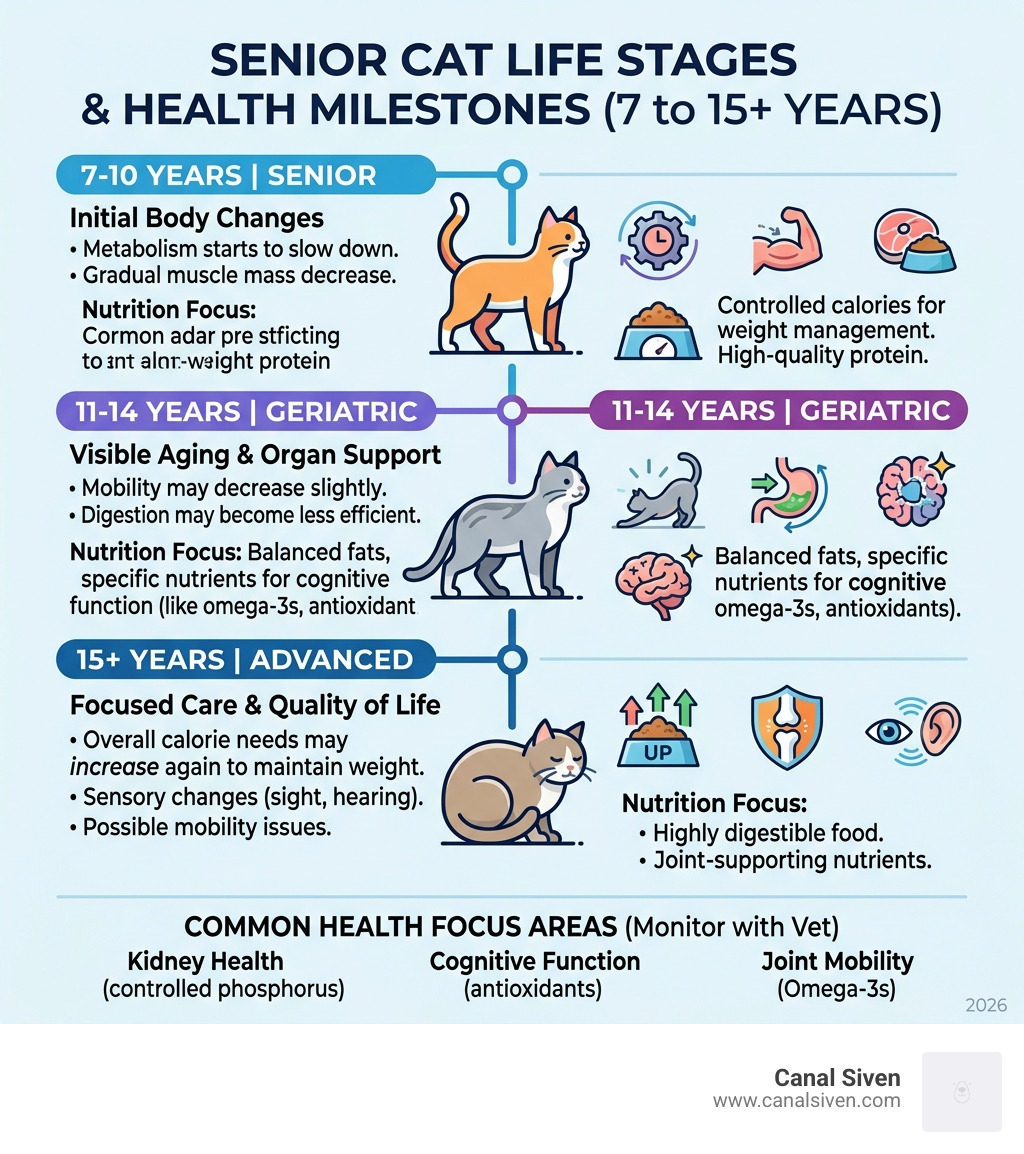
| When is a cat “senior”? | Ages 7-10 are considered senior; 11+ is geriatric |
| Main nutritional change | Calorie needs drop first, then increase after age 11 |
| Most important nutrients | High-quality protein, omega-3s, taurine, controlled phosphorus |
| Wet vs. dry food | Wet food is often better for hydration and easy chewing |
| Biggest health risks | Kidney disease, cancer, and heart disease |
| When to see a vet | Before switching food, or if you notice weight loss or increased thirst |
Your cat doesn’t show aging the way dogs do. There’s no gray muzzle, no obvious slowdown — at least not at first.
But around age 7, real changes are happening under the surface. Metabolism shifts. Muscles start losing mass. Organs work harder. Digestion becomes less efficient.
And as one veterinary nutrition resource puts it: “While old age is not a disease, the body changes associated with aging make older cats more vulnerable to medical problems and disease.”
The food in your cat’s bowl can either support those changes — or quietly work against them. Research shows that eating 20-25% fewer calories daily can actually slow age-related decline and extend a cat’s lifespan. But it’s not just about eating less. It’s about eating smarter.
This guide breaks down everything you need to know about feeding your senior cat well — from understanding what their aging body actually needs, to choosing the right food, managing health conditions through diet, and knowing when to call your vet.
Understanding the Nutritional Needs of Senior Cat Food
As we watch our feline friends transition into their golden years, we have to recognize that their internal “engine” is changing. In April 2026, we have more data than ever showing that a “one size fits all” approach to cat food simply doesn’t work for seniors.
Metabolism Changes and Calorie Management
The way a cat processes energy isn’t a straight line. For most cats, metabolic rates slow down between ages 7 and 10, often leading to weight gain. However, a fascinating shift occurs around age 11. Research indicates that energy requirements actually start to increase in geriatric cats. This is often because their bodies become less efficient at digesting fats and proteins.
Protein Digestibility and Phosphorus Restriction
There is a common myth that all senior cats need low-protein diets. We now know that healthy seniors actually require high-quality, highly digestible animal protein to maintain their muscle mass. However, if a cat has underlying kidney issues, phosphorus levels must be carefully controlled. Excess phosphorus can put a significant strain on aging kidneys, making the balance of minerals a top priority in senior cat food selection.
For more technical details on how these needs shift, you can explore Scientific research on feline energy requirements and aging.

Nutrient Profile Comparison Table
To help you visualize the difference, here is how a typical nutrient profile shifts from the “prime” years to the “senior” years:
| Nutrient | Adult (1-6 Years) | Senior (7-10 Years) | Geriatric (11+ Years) |
|---|---|---|---|
| Calorie Density | Moderate to High | Lower (to prevent obesity) | Higher (to prevent weight loss) |
| Protein Quality | Standard | Very High (Digestibility is key) | Exceptional (Maximum absorption) |
| Phosphorus | Standard | Controlled | Restricted (if kidney issues exist) |
| Fiber | Moderate | Increased (for digestion) | Moderate |
| Omega-3s | Optional | Recommended | Essential |
Why Senior Cats Require Different Nutrition
Muscle mass maintenance is perhaps the biggest challenge for aging cats. You might notice your cat looking “thinner” or “bony” along the spine; this is often sarcopenia, or age-related muscle wasting. By providing a diet rich in animal-based amino acids, we can help preserve that muscle.
Furthermore, organ support becomes critical. The liver and kidneys are the body’s filtration systems, and after a decade of service, they appreciate a diet that produces fewer metabolic “waste” products. As mentioned earlier, reducing total caloric intake by 20-25% in the early senior years can prevent the inflammation associated with obesity, which is a leading driver of age-related changes.
Key Ingredients to Look for in Senior Cat Food
When scanning the label of a senior cat food, look for these “super-ingredients”:
- Omega-3 Fatty Acids (EPA and DHA): These are powerful anti-inflammatories that support brain health and joint mobility.
- Antioxidants (Vitamins E and C): These help fight free radicals and support a weakening immune system.
- Taurine: Critical for heart and eye health, especially as the heart muscle may weaken with age.
- Probiotics and Soluble Fiber: These support the gut microbiome, ensuring your cat can actually absorb the nutrients you’re paying for.
- Glucosamine and Chondroitin: The building blocks of healthy cartilage to keep them jumping (or at least stepping comfortably).
- L-carnitine: Helps the body turn fat into energy, protecting against “middle-age spread.”
Managing Common Health Issues Through Diet
Proper nutrition is often the first line of defense against the most common “old cat” ailments.
Chronic Kidney Disease (CKD)
Kidney disease is a leading cause of non-accidental death in older felines. Because the kidneys lose the ability to process waste, a specialized senior cat food for CKD will typically feature lower phosphorus and sodium levels. High moisture content is also non-negotiable here to keep the blood filtered.
Arthritis and Joint Inflammation
If your cat is no longer sleeping on the high bookshelf, it’s likely due to joint pain. Diets enriched with green-lipped mussel, fish oils, and glucosamine can reduce the need for medicinal painkillers by lowering systemic inflammation.
Diabetes and Cognitive Dysfunction
Overweight seniors are at high risk for diabetes. A diet that is high in protein but low in simple carbohydrates helps maintain steady blood sugar. For cognitive health—the feline version of dementia—antioxidants and medium-chain triglycerides (MCTs) can help keep the “mental lights” on.

Wet Food vs. Dry Food for Aging Felines
This is the great debate among cat parents. In our experience at Canal Siven, we often find that a “mixed” approach or a transition toward wet food is best for seniors.
The Benefits of Wet Food:
- Hydration: Many seniors live in a state of chronic “sub-clinical” dehydration. Wet food provides the moisture their kidneys desperately need.
- Ease of Chewing: Dental disease is rampant in cats over 10. Soft textures are much more comfortable for a mouth with missing teeth or sore gums.
- Palatability: Senior cats often lose their sense of smell. The strong aroma of wet food can entice a picky eater.
The Benefits of Dry Food:
- Caloric Density: For very thin geriatric cats, dry food is an easy way to pack in calories.
- Dental Health: Some specialized kibbles are designed to mechanically “scrub” plaque, though this is less effective if the cat has painful gums.
How to Transition Your Pet to Senior Cat Food
Never switch a senior cat’s food overnight. Their digestive systems are less resilient than they used to be. We recommend a 7-day transition plan:
- Days 1-2: 75% old food, 25% new food.
- Days 3-4: 50% old food, 50% new food.
- Days 5-6: 25% old food, 75% new food.
- Day 7: 100% new senior cat food.
During this time, monitor their stool quality and appetite. If they refuse to eat, try warming the food slightly to release the aromas.
Practical Feeding and Monitoring Strategies
Feeding a senior cat is about more than just what’s in the bowl; it’s about how you feed them.
Portion Control and Body Condition
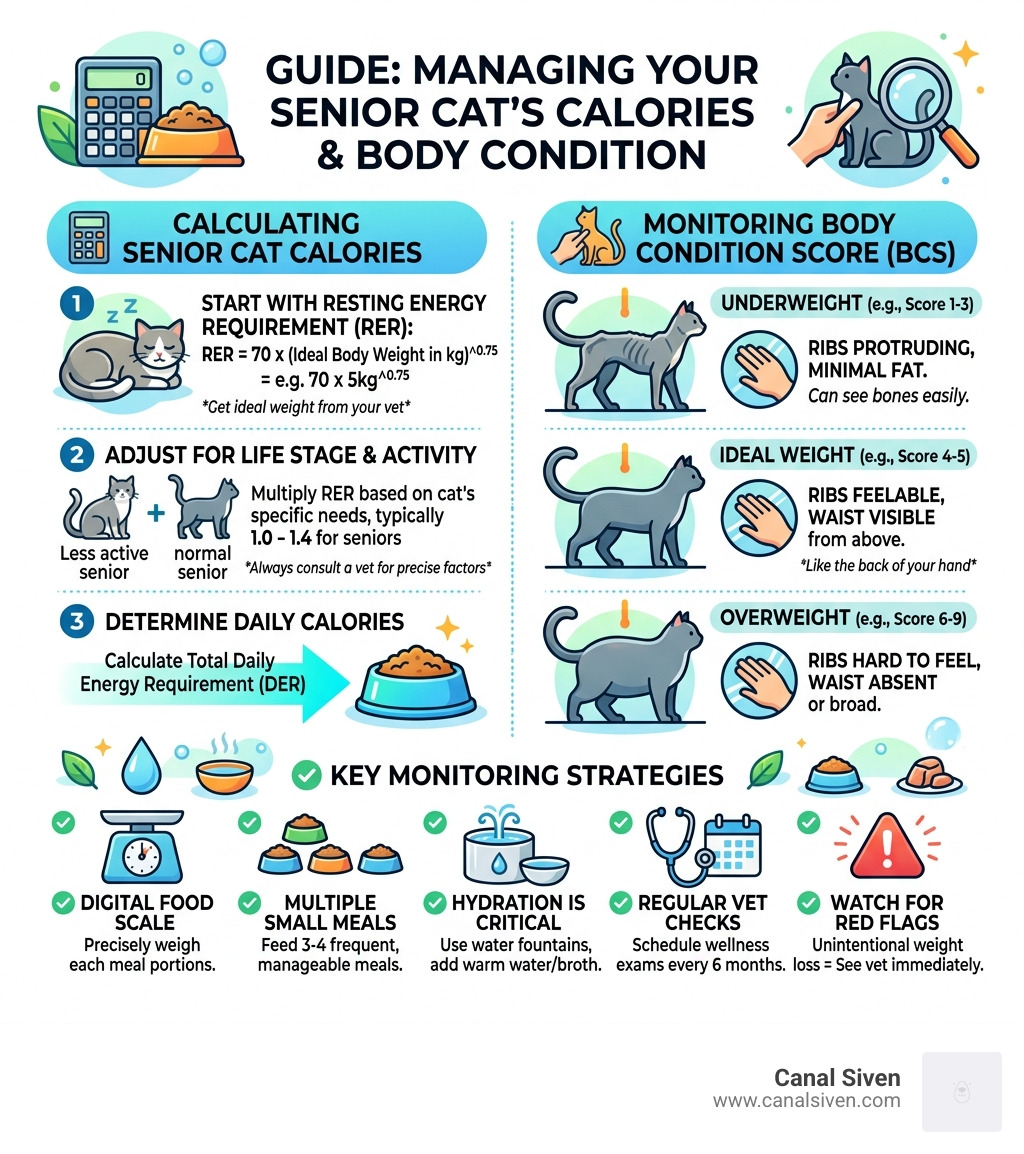
Use a digital scale to weigh your cat’s food. Even an extra 10-15 calories a day can lead to significant weight gain over a year. You should also learn to check their Body Condition Score (BCS). You should be able to feel their ribs easily (like the back of your hand) but not see them protruding.
Feeding Frequency
Instead of one or two large meals, many seniors do better with 3-4 smaller, frequent meals. This is easier on their digestion and helps keep their energy levels stable throughout the day.
Hydration Hacks
Since hydration is the “secret sauce” of senior health, try these tips:
- Place water bowls away from food (cats naturally don’t like drinking where they “kill” their prey).
- Use a circulating water fountain.
- Add a tablespoon of warm water or unsalted broth to their dry kibble.
When to Consult a Veterinarian
You should always consult a vet before making a major dietary change, especially if your cat has a known health condition. Schedule a senior wellness exam every 6 months.
Red Flags that require an immediate vet visit:
- Unintentional Weight Loss: Even if they are eating well, this could signal hyperthyroidism or diabetes.
- Increased Thirst: A classic sign of kidney disease or diabetes.
- Changes in Appetite: Refusing food for more than 24 hours is an emergency in senior cats.
- Hiding or Lethargy: Cats are masters at hiding pain; a change in behavior is often a “silent cry” for help.
Frequently Asked Questions about Senior Cat Food
Is wet food better than dry for senior cats?
Generally, yes. The high moisture content (often 75-80%) supports kidney function and urinary tract health, which are the most common “weak points” in aging cats. However, if your cat is underweight, a mix of both can provide the necessary caloric boost.
How many calories does a senior cat need?
A general rule of thumb is 20-30 calories per pound of body weight. However, this varies wildly. An inactive 10-year-old might need only 180 calories, while a thin 15-year-old might need 250+ calories to maintain their weight. Always adjust based on your cat’s specific body condition.
What ingredients should I avoid in older cat diets?
Avoid foods with excessive sodium (bad for heart and kidneys) and high carbohydrate loads (fillers like corn and wheat that contribute to obesity). Also, stay away from “unnamed animal by-products”—you want to see “Chicken” or “Salmon,” not “Meat Meal.”
Conclusion
At Canal Siven, we believe that the “golden years” should be truly golden. Providing the right senior cat food is one of the most impactful ways you can ensure your companion stays vibrant, comfortable, and by your side for as long as possible.
Whether you are looking for the best commercial brands or considering a more hands-on approach, we have resources to help. If you’re interested in exploring the benefits of fresh, biologically appropriate diets, check out our guide on Going Raw with Bella Duke: A Guide for Discerning Cat Parents.
For more tailored nutrition solutions and financial insights for smart pet parenting, you can find more info about our services on our homepage. Your cat has given you years of loyalty; now is the time to return the favor with the best nutrition possible.
