
How Liquid Cat Food for Senior Cats Saves Mealtime for Picky Seniors
Why Senior Cats Struggle at Mealtime — and How Liquid Food Helps
Liquid cat food for senior cats is one of the simplest ways to keep aging pets eating well, staying hydrated, and getting the nutrition they need.
Here’s a quick look at why it works:
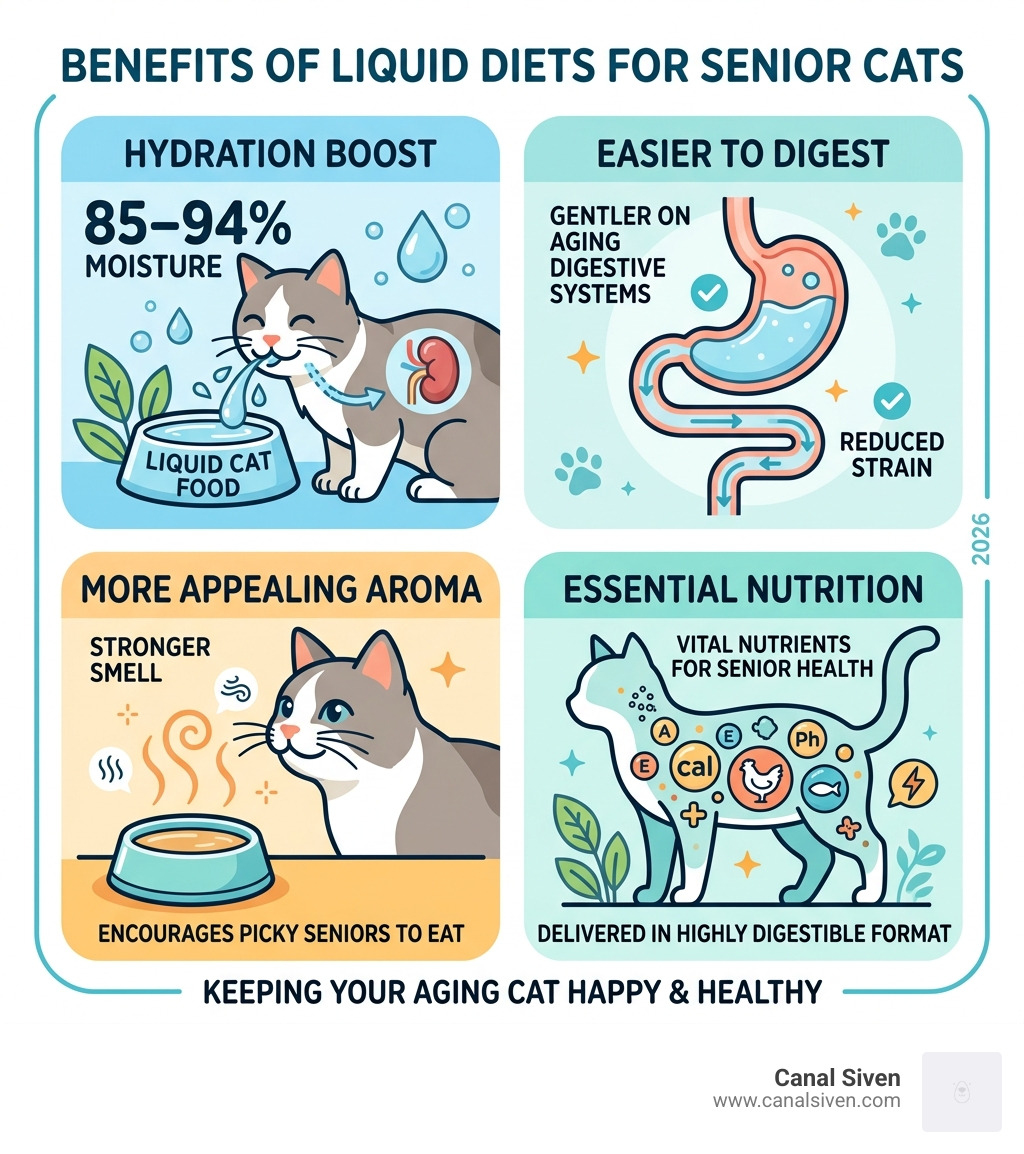
- Hydration boost — liquid foods contain up to 85–94% moisture, helping cats who don’t drink enough water
- Easier to eat — no chewing required, ideal for cats with dental pain or missing teeth
- More appealing smell — stronger aroma encourages picky or low-appetite seniors to eat
- Gentler on digestion — highly digestible formats reduce strain on aging digestive systems
- Flexible use — works as a full meal, a food topper, or an appetite stimulant
As cats get older, their bodies change in ways that make regular mealtimes harder. Energy needs shift. Teeth weaken. The sense of smell dulls. Some cats simply stop eating enough — not out of stubbornness, but because eating has become uncomfortable or unappealing.
Chronic dehydration is especially common in senior cats, and it can quietly speed up conditions like kidney disease without obvious warning signs. Most cats have a naturally low thirst drive, so they rely on their food to get moisture.
That’s where liquid diets come in. Whether it’s a broth, a puree, or a complete liquid meal replacer, these foods meet cats where they are — at a life stage where how they eat matters just as much as what they eat.
This guide breaks down the real benefits, what to look for, and how to make liquid food work for your senior cat’s daily routine.
Why Liquid Cat Food for Senior Cats is a Game Changer
When we look at the pet care landscape in April 2026, it is clear that “liquid diets” are no longer just for cats recovering from surgery. They have become a staple for healthy aging. We have seen a massive shift in how owners approach the “senior slump”—that period where a cat starts sniffing their bowl and walking away.
Liquid cat food for senior cats acts as a bridge. For many felines, the aging process includes a decline in olfactory sensitivity. If they can’t smell it, they often won’t eat it. Liquid foods, especially when served at room temperature or slightly warmed, release a much more potent aroma than dry kibble. This olfactory stimulation is often the “off-switch” for pickiness.
Furthermore, scientific research into feline hydration emphasizes that cats are “low-thirst” animals by evolution. In the wild, they get moisture from prey. In a home setting, a senior cat with stiff joints might not feel like walking to the water fountain as often as they should. By providing a diet with 90% or higher moisture content, we are essentially “sneaking” hydration into their system. This is a game changer for kidney health, as adequate water intake helps flush toxins and supports overall renal function.
Digestibility is another major factor. As cats reach their geriatric years (often defined as 11+ or 12+), their ability to process fats and proteins can decrease. Liquid formats are often pre-processed into smooth purees or light broths, making nutrient absorption much more efficient for a fragile digestive tract.
Key Nutritional Needs for Aging Felines
Feeding a senior cat isn’t just about reducing calories; in fact, for many cats over the age of 11, energy requirements actually increase because their bodies become less efficient at absorbing nutrients. We need to focus on calorie density and high-quality protein to prevent muscle wasting, a common issue known as sarcopenia.
According to scientific research on senior cat energy requirements, there is no single “senior” nutrient profile that fits every cat. Instead, we must look for specific functional ingredients:
- Protein Maintenance: High-quality animal protein (like tuna, chicken, or salmon) should be the first ingredient to help maintain muscle mass.
- Joint Health: Ingredients like Glucosamine, Chondroitin, and Green-lipped mussel are vital for mobility.
- Phosphorus Levels: For cats with early-stage kidney issues, controlled phosphorus is essential to slow disease progression.
- Omega-3 Fatty Acids: EPA and DHA from fish oil support brain health and reduce inflammation.
- Antioxidants & Taurine: Vitamin E and Taurine support the immune system and heart function.
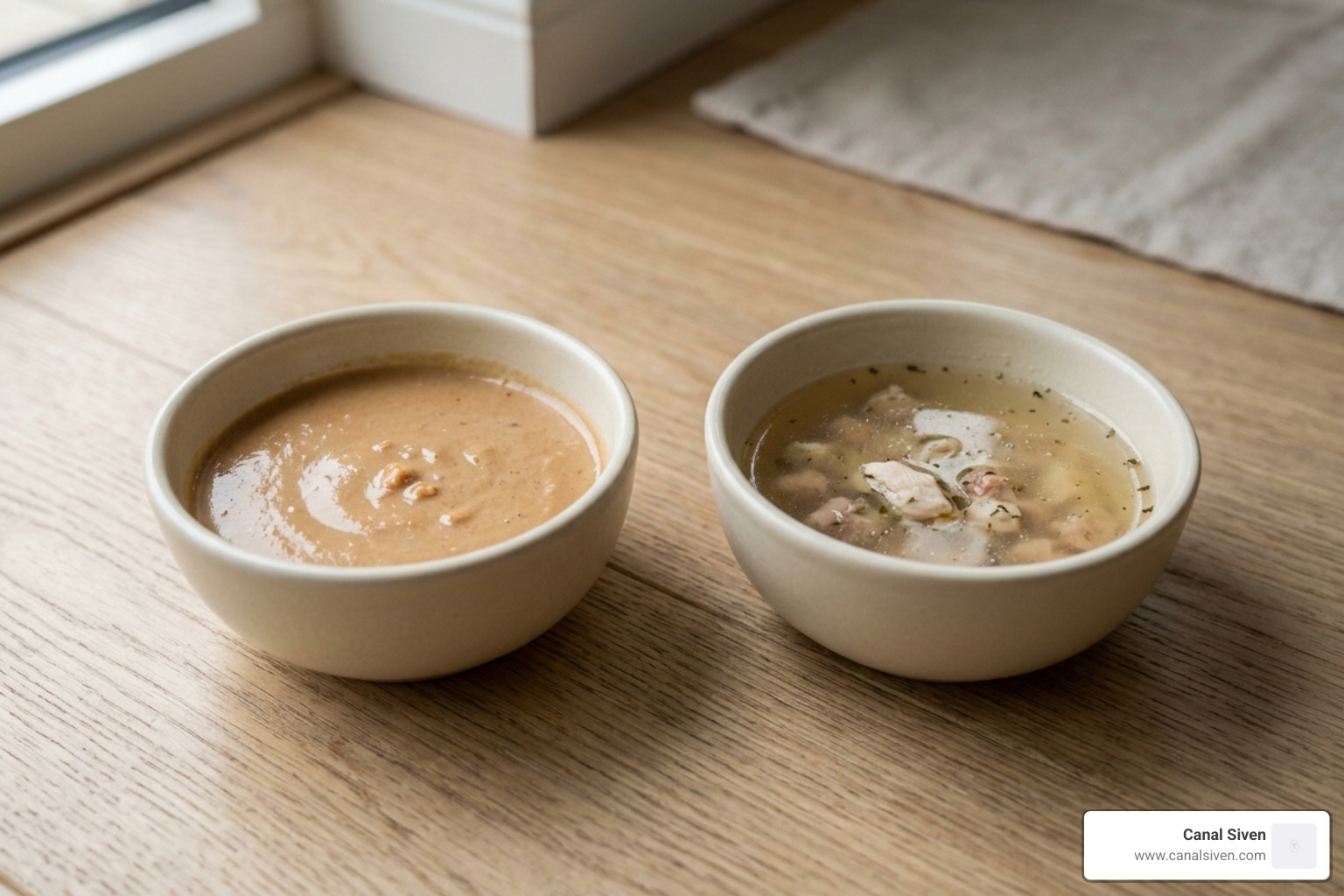
To help you navigate the aisles, we’ve put together a comparison of the most common liquid formats available today:
| Feature | Broths & Soups | Bisques & Purees | Liquid Meal Replacers |
|---|---|---|---|
| Moisture Content | Very High (90%+) | High (82-86%) | Moderate to High (80-85%) |
| Calorie Density | Low (Treat/Topper) | Moderate | High (Complete Meal) |
| Texture | Thin liquid with flakes | Creamy, smooth | Silky, uniform liquid |
| Best For | Hydration & Picky Eaters | Dental issues | Underweight/Ill cats |
| Example | Fancy Feast Broths | Hartz Delectables | Tiki Cat Solutions |
How to Choose the Best Liquid Options for Your Pet
With over 437 results for liquid cat food for senior cats on major retail sites, the choices can be overwhelming. We recommend starting with a variety pack. Senior cats can be notoriously fickle—what they loved on Tuesday might be “unacceptable” by Friday.
When browsing, look for texture variety. Some cats are “lickers” who prefer a smooth bisque, while others are “lappers” who enjoy a thin gravy. If your cat is underweight, look for products labeled as “High Calorie” or “Meal Replacers.” For example, products like Tiki Cat Solutions Liquid Meal Replacer offer about 122 kcal per pouch, which is significantly higher than a standard treat-style broth.
Identifying High-Quality Ingredients in Liquid Cat Food for Senior Cats
We always tell our readers: read the label from the top down. The first three ingredients should be recognizable animal proteins or broths (e.g., Tuna, Tuna Broth, Chicken). Avoid “meat by-products” or excessive fillers like corn and soy if your cat has a sensitive stomach.
Look for these “super-ingredients” often found in premium senior formulas:
- Green-lipped mussel: A natural source of omega-3s and chondroitin for joint support.
- Pumpkin: Provides gentle fiber to help with digestive regularity and hairballs.
- Inulin: A prebiotic that supports healthy gut flora.
- Vitamin B12: Often added to senior diets to support energy levels and cognitive function.
Comparing Textures and Calorie Content in Liquid Cat Food for Senior Cats
It is important to distinguish between a “snack” and a “meal.”
- Hartz Delectables Senior 10+: These are wildly popular, with over 7,900 reviews and a 4.6-star rating. They are excellent as “lickable treats” to bond with your pet or stimulate appetite.
- Sheba Perfect Portions: These pates often have a 4.6-star rating across nearly 50,000 reviews. While they are wet food, they can be mashed with a little warm water to create a “soupy” consistency that seniors love.
- Ready Cal for Cats: This is a high-calorie booster (4.1 stars, 8,000+ reviews) specifically for cats who are refusing solid food entirely. It’s a dense nutritional gel that can be a lifesaver for underweight seniors.
Incorporating Liquid Diets into Daily Routines
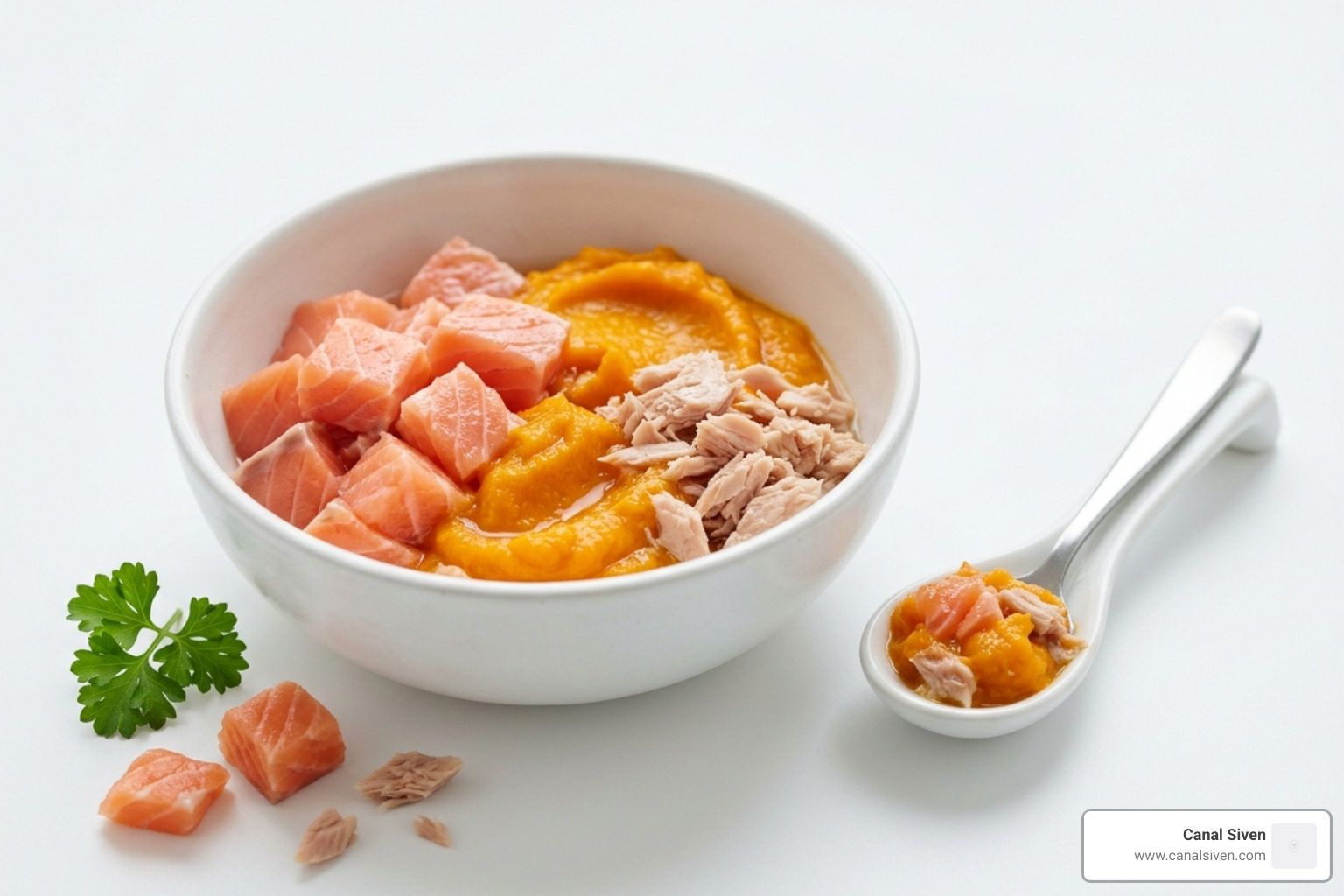
Transitioning a senior cat to a new diet should never be an overnight affair. We recommend the “7-Day Rule.” Start by adding a small spoonful of liquid food as a meal topper to their usual kibble or wet food. Gradually increase the liquid portion while decreasing the old food.
Pro-Tips for Mealtime Success:
- The Warmth Factor: Cats prefer food that is “prey temperature” (around 100°F). Briefly warming a liquid pouch in a bowl of warm water (not the microwave, which can create hot spots) can make the aroma irresistible.
- Small, Frequent Meals: Senior cats often have smaller appetites. Instead of two large meals, try offering 4–5 small “liquid snacks” throughout the day.
- The “Plate” Matters: Many seniors suffer from “whisker fatigue.” Use a shallow, flat plate rather than a deep bowl so their whiskers don’t touch the sides while they lap up their liquid food.
- Hydration Stations: Even if you are feeding a liquid diet, always provide fresh water. Some seniors prefer water fountains, as the sound of running water triggers their thirst drive.
Veterinary Recommendations and Precautions
While we love the benefits of liquid cat food for senior cats, it is not a “one size fits all” cure. We always advise a veterinary consultation before making major dietary shifts, especially if your cat has underlying health issues.
Key Medical Considerations:
- Kidney Disease (CKD): Many liquid treats are high in phosphorus. If your cat has CKD, your vet might recommend a specific prescription liquid diet like Royal Canin Mature Consult.
- Weight Monitoring: Because liquid foods are so easy to eat, it’s easy to overfeed. Conversely, some broths are very low in calories, and a cat fed only broths might lose weight. Use a baby scale to track your cat’s weight weekly.
- Dental Exams: If your cat suddenly demands liquid food and refuses solids, they may have a painful tooth or gum inflammation. A liquid diet helps them eat, but it doesn’t “fix” the dental pain.
- Storage and Spoilage: Liquid food spoils much faster than dry food. Once a pouch is opened, it should be refrigerated and used within 24–48 hours. Never leave liquid food out in a bowl for more than 30–60 minutes.
Frequently Asked Questions about Liquid Cat Food for Senior Cats
Can liquid food replace solid meals entirely?
It depends on the product. “Complementary” foods (like many lickable treats or broths) do not contain the full spectrum of vitamins and minerals a cat needs to survive. However, “Complete and Balanced” liquid meal replacers (like Tiki Cat Solutions or Royal Canin Veterinary formulas) are designed to meet AAFCO standards and can serve as a total meal replacement if your vet approves.
How do I know if my senior cat is dehydrated?
We recommend the “Skin Tent” test. Gently pinch the skin between your cat’s shoulder blades and let go. In a hydrated cat, it snaps back instantly. In a dehydrated cat, it stays “tented” for a second or two. Other signs include dry, tacky gums, lethargy, and sunken eyes. If you see these signs, a liquid diet is a great first step, but a vet visit is mandatory.
Are there liquid supplements for underweight cats?
Yes! High-calorie gels and liquid boosters like Ready Cal are specifically formulated for this. They are packed with fats and vitamins to help maintain muscle mass in “picky” seniors who have lost interest in traditional bowls of food.
Conclusion
At Canal Siven, we believe that smart living extends to every member of your family—including the furry ones who have been by your side for over a decade. Navigating liquid cat food for senior cats is about more than just finding a “tasty treat”; it’s about providing tailored nutrition that respects the biological changes of aging.
By choosing high-quality ingredients, monitoring hydration, and working closely with your veterinarian, you can ensure your senior cat’s golden years are filled with vitality and, most importantly, happy mealtimes. Whether you are looking for financial insights into pet care costs or the best homemade meal recipes, we are here to help you make informed decisions for a healthier life.
For more expert advice on pet nutrition and smart living solutions, visit our pet nutrition services.
