
Cobalamin 101: Picking the Best Vitamin B12 Supplement for Dogs
The Best Vitamin B12 Supplements for Dogs: A Quick Guide
The best vitamin b12 supplement for dogs depends on your dog’s size, health condition, and how well they absorb nutrients. Here are the top options based on customer reviews and veterinary recommendations:
- Nutramax Cobalequin (Medium/Large Dogs) — 1,000 mcg cyanocobalamin + 5-MTHF, chewable tablet, 4.8/5 stars (979 reviews), bought 4,000+ times/month
- Nutramax Cobalequin (Cats/Small Dogs) — 250 mcg cyanocobalamin + 5-MTHF, chewable tablet, 4.7/5 stars (1,552 reviews)
- Pet Factor B-12 (Methylcobalamin form) — 4.7/5 stars (648 reviews)
- Rx Vitamins Rx B12 for Dogs & Cats — Bacon-flavored liquid, 4.5/5 stars (359 reviews)
- Native Pet 11-in-1 Multivitamin — Includes B12 alongside other nutrients, 4.3/5 stars (1,855 reviews)
Quick tip: Always confirm a B12 deficiency with a vet blood test before supplementing. Most dogs eating AAFCO-compliant food get enough B12 from their diet alone.
Vitamin B12 — also called cobalamin — is one of those nutrients that quietly keeps everything running. It powers your dog’s energy, supports their nervous system, and helps form healthy red blood cells. Dogs can’t make it on their own. They have to get it from food or supplements.
For most healthy dogs eating quality commercial food, that’s not a problem. But for dogs with certain digestive diseases — like Inflammatory Bowel Disease (IBD) or Exocrine Pancreatic Insufficiency (EPI) — the gut simply can’t absorb enough B12, even when the diet is good. Some breeds, including Border Collies and Australian Shepherds, also carry a genetic trait that impairs B12 absorption.
The result? Fatigue, poor appetite, weight loss, and in serious cases, neurological problems.
The good news is that B12 supplementation is safe, affordable, and effective — when used correctly. This guide walks you through everything you need to know: what to look for, which products stand out, and how to dose based on your dog’s size and needs.
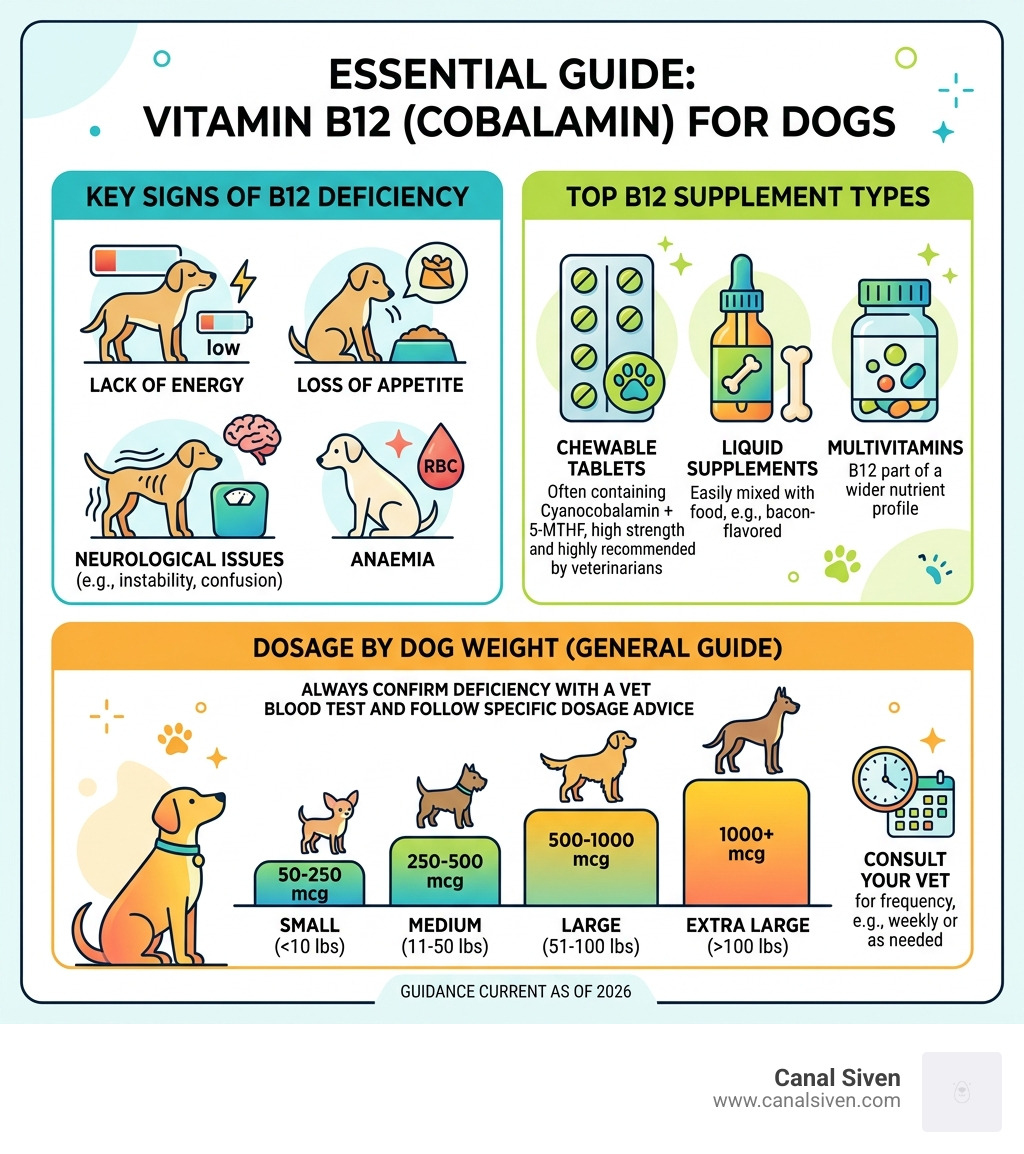
Why Your Dog Needs Vitamin B12 (Cobalamin)
As we move into April 2026, pet owners are more focused than ever on cellular health. Vitamin B12 is at the heart of that movement. Cobalamin is a water-soluble vitamin that acts as a co-factor for dozens of metabolic processes. Without it, your dog’s body literally starts to slow down at a molecular level.
Energy Metabolism and DNA Synthesis
B12 is essential for converting food into usable energy. It facilitates the metabolism of fatty acids and amino acids, ensuring that the protein and fat in your dog’s bowl actually fuel their zoomies. Furthermore, it is critical for DNA synthesis, which means it plays a role in every new cell your dog produces.
Red Blood Cell Formation and Nervous System Health
If you’ve noticed your dog seems unusually tired, it could be a sign that their red blood cells aren’t forming correctly. B12 is a primary driver of red blood cell production; without it, dogs can develop anemia. Beyond blood health, B12 maintains the myelin sheath—the protective coating around nerves. This is why a deficiency often leads to “shaky” legs or confusion in senior dogs.
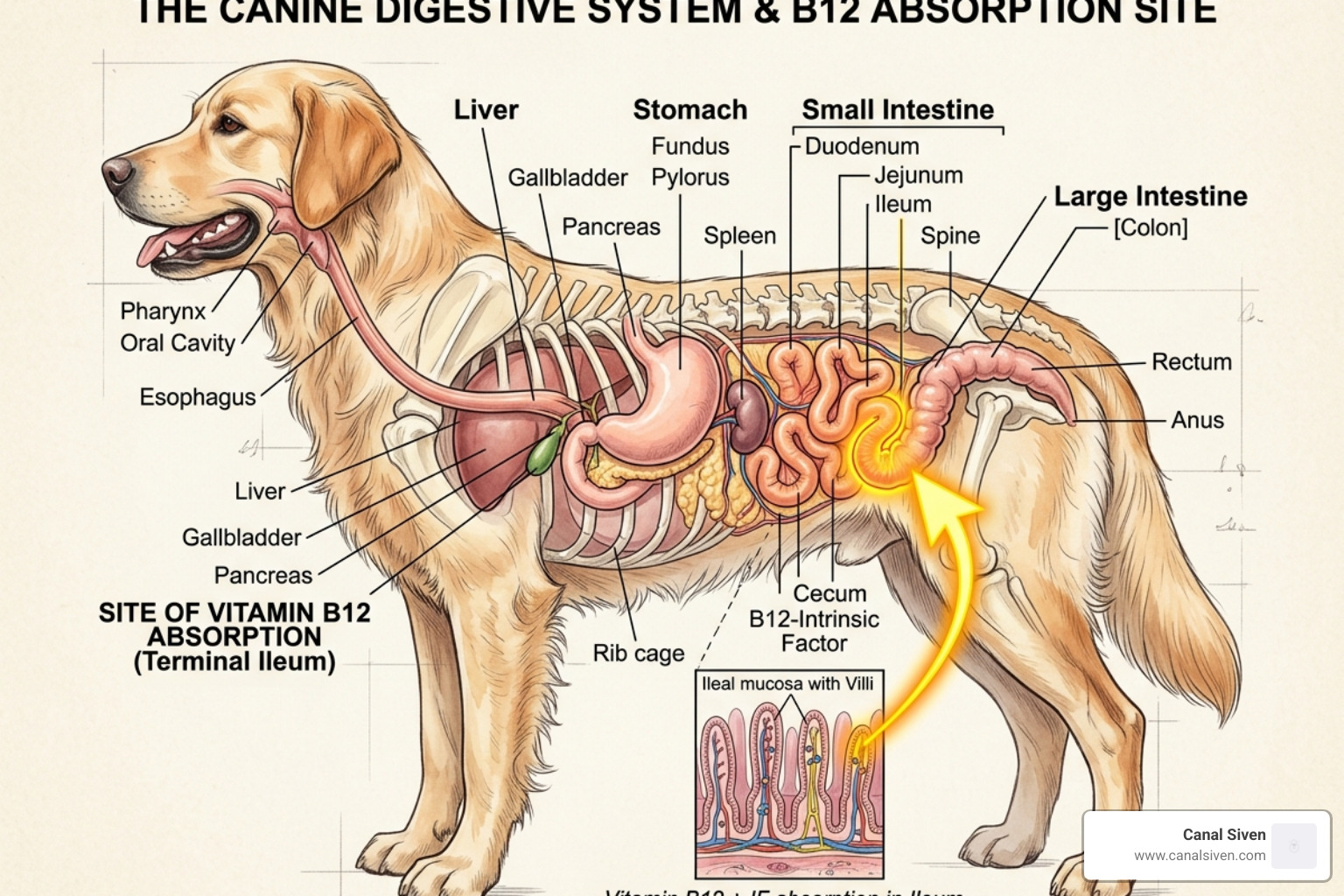
Identifying Signs and Causes of B12 Deficiency
Knowing when to look for the best vitamin b12 supplement for dogs starts with recognizing that something is off. Because B12 is stored in the liver, a deficiency doesn’t happen overnight—it’s a slow burn that can take months to manifest.
The Tell-Tale Symptoms
- Lethargy: Not just a nap after a walk, but a persistent lack of interest in play.
- Poor Appetite and Weight Loss: A sudden “pickiness” that results in visible ribcage exposure.
- Gastrointestinal Issues: Chronic diarrhea or vomiting can be both a symptom and a cause.
- Neurological Tremors: In advanced cases, you may see “napping tremors” or weakness in the hindquarters.
Common Clinical Causes
Most B12 issues stem from malabsorption rather than a lack of B12 in the food. According to research on gastrointestinal disease and B12 absorption, the following conditions often require lifelong supplementation:
- Exocrine Pancreatic Insufficiency (EPI): The pancreas doesn’t produce enough enzymes, preventing the body from “unlocking” B12 from food.
- Inflammatory Bowel Disease (IBD): Inflammation in the small intestine prevents the absorption of the B12-intrinsic factor complex.
- Genetic Malabsorption: Breeds like Border Collies, Australian Shepherds, Beagles, and Giant Schnauzers can have a hereditary condition (Imerslund-Gräsbeck Syndrome) where they simply cannot absorb B12 through the gut.
Choosing the Best Vitamin B12 Supplement for Dogs
When you’re browsing the aisles (or the web) for a supplement, you’ll encounter several different formats. The “best” one is the one your dog will actually take and that their body can actually use.
| Feature | Oral Tablets/Chewables | Liquid Drops | Injections |
|---|---|---|---|
| Best For | Daily maintenance & ease of use | Picky eaters & precise dosing | Severe malabsorption (EPI/IBD) |
| Bioavailability | High (if contains 5-MTHF) | High | Highest |
| Flavor | Chicken or Beef | Bacon or Fish | N/A |
| Administration | Treat-like | Dropper into food/mouth | Subcutaneous (at vet or home) |
Bioavailability: Cyanocobalamin vs. Methylcobalamin
There is a healthy debate in the veterinary community about the best form of B12.
- Cyanocobalamin: This is the most common form used in animal feed and supplements. It is highly stable and converts into active forms (methylcobalamin and adenosylcobalamin) inside the dog’s body.
- Methylcobalamin: This is the “active” form. Some experts believe it is superior for dogs with liver issues because it doesn’t require conversion, though studies show cyanocobalamin is often more bioavailable for general canine use.
Synergy: The Role of 5-MTHF
The best vitamin b12 supplement for dogs often includes Folate, specifically in the form of 5-methyltetrahydrofolate (5-MTHF). B12 and Folate work together in a “tag-team” fashion to support DNA synthesis and red blood cell health. Products like Cobalequin include both to ensure that even if a dog has a metabolic “roadblock,” the nutrients can still do their job.
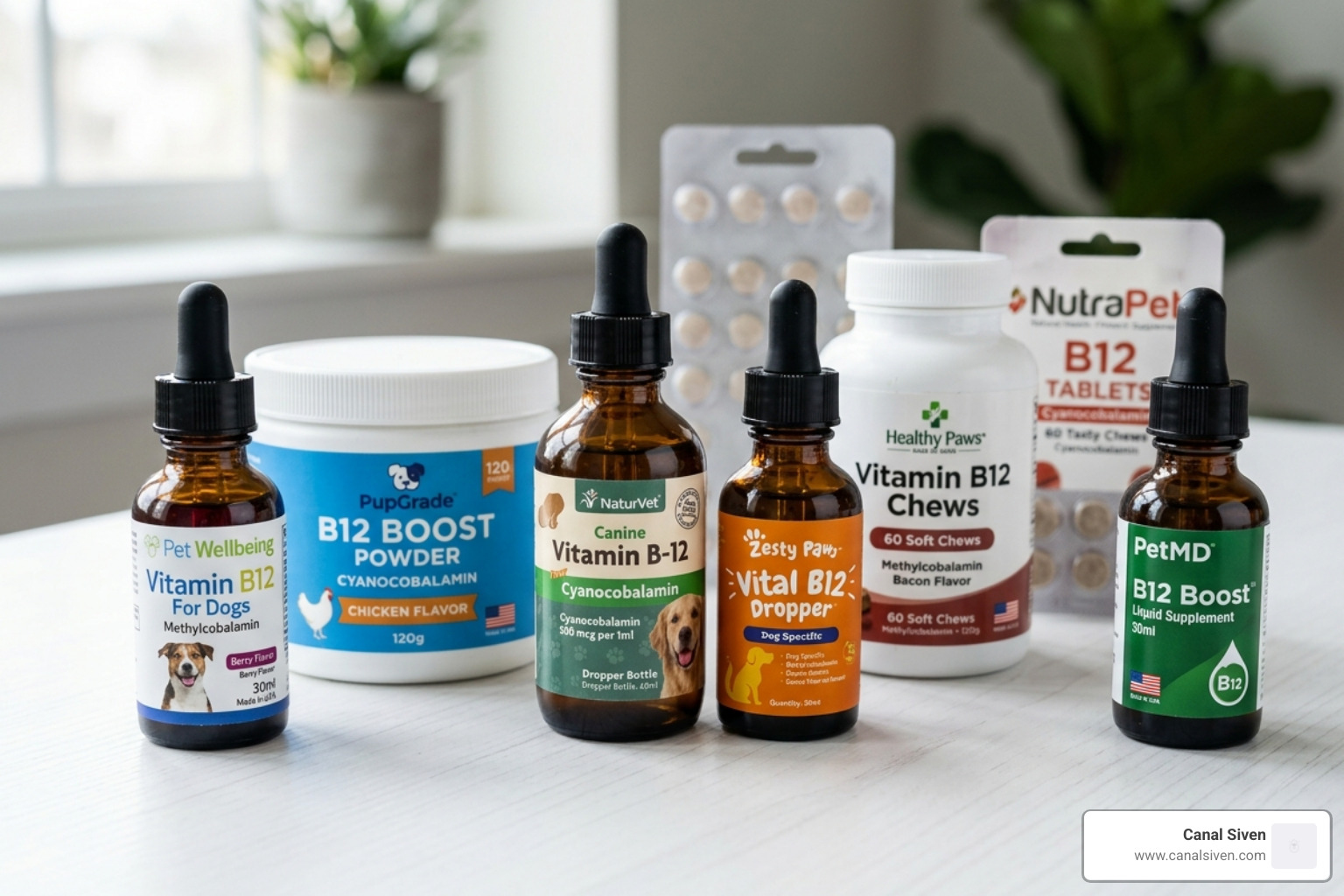
Best Vitamin B12 Supplement for Dogs: Chewables vs. Liquids
For most of us, convenience is king.
- Chewables: Many dogs view these as treats. Nutramax Cobalequin, for instance, uses a savory chicken flavor that makes compliance easy. These are ideal for dogs who are still eating well.
- Liquids: If your dog has a poor appetite or is very small, a liquid like Rx B12 (often bacon-flavored) is a lifesaver. You can use a graduated dropper to put the exact dose directly into their mouth or onto a small amount of wet food.
Key Features of the Best Vitamin B12 Supplement for Dogs
When we evaluate supplements at Canal Siven, we look for these “gold standard” markers:
- NASC Quality Seal: Ensures the manufacturer meets strict independent quality standards.
- GMP-Compliant Manufacturing: This means the product is made in a facility that follows “Good Manufacturing Practices.”
- Pharmaceutical-Grade Purity: Avoids fillers that could trigger allergies.
- Light-Proof Packaging: B12 is sensitive to light and can degrade if stored in clear bottles. Always look for opaque or amber containers.
Recommended Dosages and Administration Guidelines
Dosage is almost always based on weight, but your vet may adjust this based on your dog’s specific blood serum levels. B12 is water-soluble, meaning the risk of “overdosing” is extremely low—the body simply pees out the excess.
Standard Oral Dosing Guidelines:
- Small Dogs & Cats (< 22 lbs): Typically 250 mcg once daily.
- Medium to Large Dogs (22–100 lbs): Typically 1,000 mcg once daily.
- Extra Large Dogs (> 100 lbs): Often 2,000 mcg (two large tablets) once daily.
Administration Tips
- Consistency is Key: B12 works best when levels are kept steady. Try to give the supplement at the same time every day.
- Storage: Store your supplements in a cool, dry place. If you are using a liquid form, check the label—some require refrigeration after opening and should be used within three months.
- The “Crush” Method: If your dog is suspicious of tablets, most B12 chewables can be crushed and mixed into a spoonful of plain yogurt or canned food.
Frequently Asked Questions about Canine B12
How long does it take for B12 supplements to show effects in dogs?
You won’t see a “Popeye eating spinach” transformation in ten minutes. However, many owners report a noticeable improvement in appetite and energy levels within 2 to 3 weeks. For dogs with severe anemia or neurological issues, it may take 4 to 6 weeks of consistent supplementation to see a full clinical response.
Are there natural food sources of Vitamin B12 for dogs?
Absolutely! If you’re a fan of homemade meals, you can boost B12 naturally. The highest concentrations are found in:
- Organ Meats: Beef liver is the gold standard (approx. 60 mcg per 100g).
- Seafood: Salmon and sardines are excellent sources.
- Eggs: Cooked whole eggs provide B12 and healthy fats.
- Dairy: Small amounts of plain Greek yogurt or cottage cheese. While these are great, dogs with absorption issues (like EPI) will almost always still need a concentrated supplement because they can’t extract the B12 from whole foods efficiently.
Is it safe to give B12 to a healthy dog?
Yes. Because B12 is water-soluble, it is considered very safe. If a healthy dog on a balanced AAFCO diet takes a B12 supplement, their body will simply eliminate the extra through their urine. While it’s usually an unnecessary expense for a perfectly healthy dog, it can be used as a preventive measure for senior dogs or those transitioning to a homemade diet.
Conclusion
Finding the best vitamin b12 supplement for dogs is a vital step in managing your pet’s long-term vitality. Whether you choose a high-potency chewable like Cobalequin or a precise liquid like Rx B12, the goal remains the same: supporting the metabolic engine that keeps your dog happy and active.
At Canal Siven, we believe in tailored pet nutrition. Every dog is an individual, and their supplement routine should reflect that. If you’re planning on moving to a homemade diet or suspect your dog isn’t absorbing their nutrients properly, we recommend working closely with your vet to monitor their serum cobalamin levels.
For more insights on financial insights for smart living and pet wellness, stay tuned to our weekly updates. Your dog’s health is an investment that pays off in years of wagging tails and sunset walks.
