
Boosting Your Cat’s Nine Lives with the Best Nutritional Supplements
Why Your Cat’s Diet May Need a Boost in 2026
Feline nutritional supplements are products — typically powders, chews, or liquids — added to a cat’s diet to fill nutritional gaps or support specific health needs like joint function, digestion, immunity, or heart health.
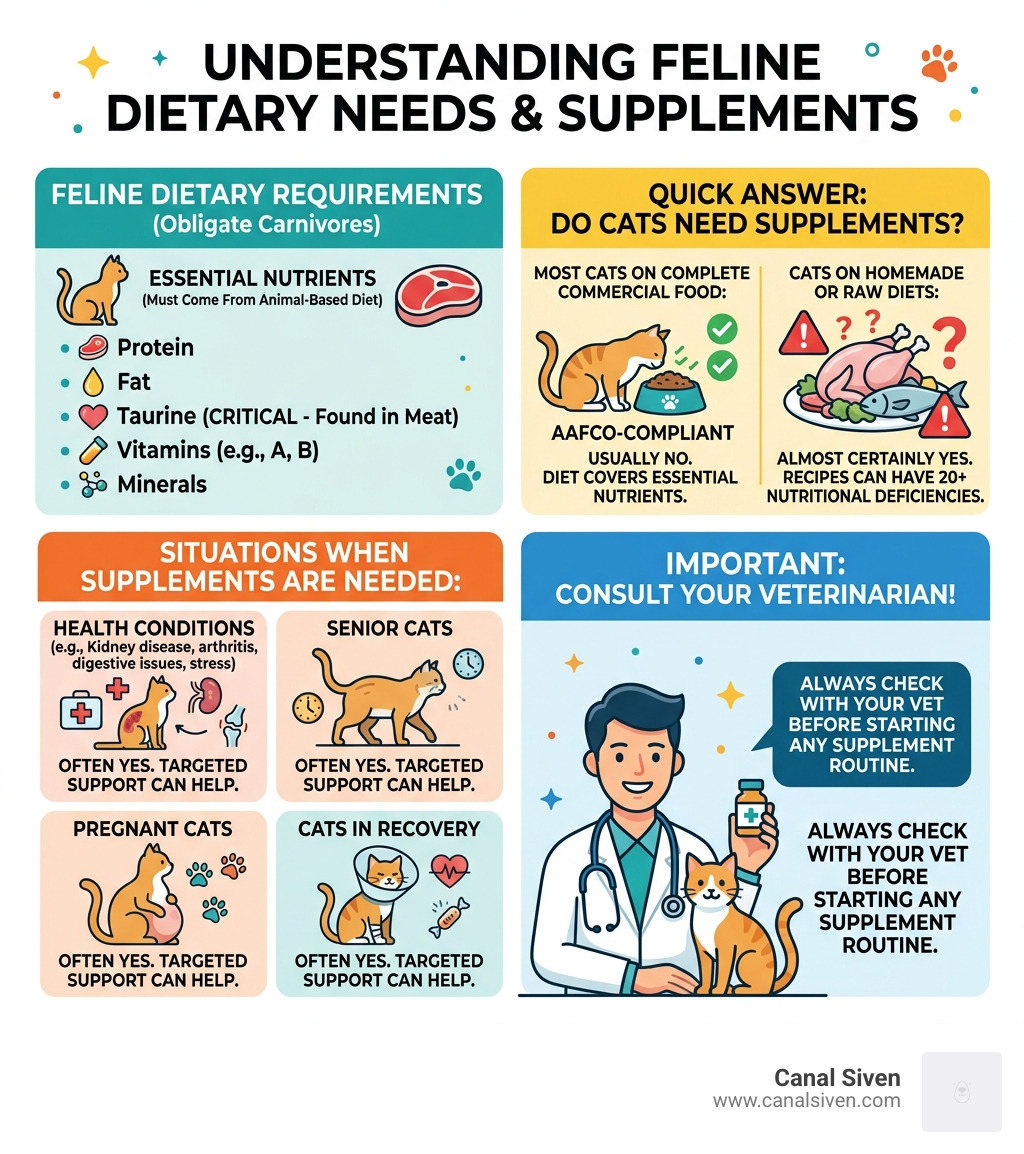
Quick answer: Do cats need supplements?
- Cats on complete commercial food (AAFCO-compliant): Usually no — their diet already covers essential nutrients
- Cats on homemade or raw diets: Almost certainly yes — homemade recipes can have 20+ nutritional deficiencies without a targeted supplement
- Cats with health conditions (kidney disease, arthritis, digestive issues, stress): Often yes — targeted supplements can make a meaningful difference
- Senior cats, pregnant cats, or cats in recovery: Frequently yes — life stage and health status change nutritional demands
Always check with your vet before starting any supplement routine.
Cats are obligate carnivores. That means their bodies depend on nutrients found only in animal-based food — like taurine, which they cannot produce on their own. Without enough taurine, cats can develop serious heart and vision problems.
Most cat owners want to do right by their pets. But the supplement aisle is confusing. Dozens of products, bold claims, and very little clarity on what actually works, what’s safe, and what’s just marketing.
This guide cuts through the noise. Whether you’re feeding homemade meals, managing a health condition, or just wondering if your cat is missing something — you’ll find clear, practical answers here.
Understanding the Feline Nutritional Supplement

At their core, a feline nutritional supplement is a concentrated source of vitamins, minerals, amino acids, or other beneficial substances designed to complement a cat’s primary food source. For us at Canal Siven, understanding the “why” behind these products is the first step toward smart living for our pets.
Cats have a unique physiology. As obligate carnivores, their metabolic pathways are “locked in” to a meat-based diet. Unlike humans or even dogs, cats have lost the ability to synthesize certain essential nutrients from plant-based precursors. This is why a simple multivitamin isn’t enough; they need highly specific biological support.
Scientific research consistently highlights that cats require enzyme support for digestion and specific fatty acids for cellular health. Modern supplements often focus on these areas, providing:
- Vitamins: Organic compounds like Vitamin A and B-complex that regulate metabolism.
- Minerals: Inorganic elements like calcium and zinc for bone and skin health.
- Amino Acids: The building blocks of protein, specifically taurine and L-lysine.
- Fatty Acids: Essential fats like Omega-3 and Omega-6 that the body cannot produce on its own.
Essential Nutrients: Taurine, Omega-3s, and Vitamins in a Feline Nutritional Supplement
If there is one “superstar” nutrient in the feline world, it is taurine. Unlike most mammals, cats cannot manufacture taurine from other amino acids. It is critical for cardiac strength, reproduction, digestion, and vision. A deficiency can lead to dilated cardiomyopathy (a serious heart condition) or retinal degeneration.
Omega-3 fatty acids, particularly Algal DHA and fish oils, are equally vital. These healthy fats support brain development in kittens and cognitive function in seniors. They also act as natural anti-inflammatories for the skin and joints.
| Nutrient | Primary Role | Signs of Deficiency |
|---|---|---|
| Taurine | Heart function & Vision | Heart failure, blindness |
| Omega-3 (DHA/EPA) | Brain health & Skin/Coat | Dry skin, cognitive decline |
| Vitamin A | Immune health & Night vision | Poor coat, night blindness |
| B-Vitamins | Energy & Nervous system | Lethargy, neurological issues |
| Vitamin D | Calcium absorption | Bone weakness, rickets |
When Does Your Cat Need a Feline Nutritional Supplement?
While high-quality commercial foods meeting AAFCO (Association of American Feed Control Officials) standards are designed to be “complete and balanced,” there are several scenarios where we must step in with extra support.
- Homemade and Raw Diets: This is the most critical area. Research shows that homemade recipes can have between 20 and 21 nutritional deficiencies if not properly balanced. Without a specialized feline nutritional supplement, these diets can inadvertently cause long-term organ damage.
- Life Stages: Kittens need extra calcium and DHA for growth, while senior cats (often classified as 7+ years in 2026) require joint support and antioxidants to combat oxidative stress.
- Chronic Illness: Cats with kidney disease often need lower phosphorus intake but higher levels of B-vitamins, which are lost through increased urination.
- Recovery and Stress: After surgery or during a move, a cat’s immune system is taxed. Transfer factors and antioxidants can help bridge the gap during these high-stress periods.
Targeted Health Benefits: From Joint Support to Gut Health

As cats age, their needs become more specialized. It isn’t just about general wellness; it’s about targeted intervention. For example, joint issues are incredibly common but often go unnoticed because cats are masters at hiding pain.
Glucosamine and Chondroitin are the gold standards for joint mobility. These compounds help protect and repair cartilage. Many modern supplements now include green-lipped mussel, which provides a unique combination of Omega-3s, iron, and chondroitin that significantly reduces inflammation.
For skin and coat health, we look for biotin and zinc. If your cat is over-grooming or has “dandruff,” it might not just be allergies; it could be a lack of essential micronutrients that support the skin barrier.
Probiotics and Digestive Wellness
The feline microbiome is a complex ecosystem of trillions of bacteria. When this balance is thrown off—due to antibiotics, stress, or poor diet—it leads to gas, bloating, and chronic diarrhea.
Species-specific probiotics are essential. Research suggests that probiotics are highly host-specific; a probiotic that works for a human or a dog might not survive the acidic environment of a cat’s stomach. Look for blends containing Lactobacillus acidophilus or Bifidobacterium longum specifically formulated for felines.
Research on the efficacy of probiotics in cats indicates that regular supplementation can improve nutrient absorption and strengthen the gut barrier, leading to a more robust immune response. Adding prebiotics like Fructooligosaccharides (FOS) acts as “fuel” for these beneficial bacteria, ensuring they thrive.
Immune Boosters and Stress Management
In 2026, we understand more than ever how environmental stressors impact feline health. Stress isn’t just “bad vibes”—it increases cortisol, which suppresses the immune system.
- L-Lysine: Often used to support cats with Feline Herpes Virus, it helps manage respiratory symptoms and sneezing.
- L-Tryptophan & Alpha-casozepine: These are natural calming agents. L-tryptophan is an amino acid that helps produce serotonin (the “feel-good” hormone), while alpha-casozepine is derived from milk protein and promotes relaxation without sedation.
- Antioxidants: Ingredients like Vitamin C (Ester C®) and Vitamin E protect cells from free radical damage, which is especially important for aging cats or those fighting chronic infections.
Safety Standards and Administration Best Practices
Safety is our top priority. Not all supplements are created equal, and the “natural” label doesn’t always mean safe.
The most important certification to look for is the NASC Quality Seal (National Animal Supplement Council). This indicates the manufacturer has passed rigorous third-party audits and meets strict labeling and quality control standards. Additionally, look for products that use human-grade ingredients and are manufactured in FDA-registered facilities.
A Critical Warning: Never give your cat supplements intended for humans or dogs.
- Human vitamins often contain dosages that are toxic to cats (especially Vitamins A and D).
- Dog products may contain ingredients like alpha-lipoic acid or certain flavorings that are safe for canines but deadly for felines.
Dosing and Administration Tips
Even the best feline nutritional supplement is useless if your cat won’t eat it. Cats are notoriously picky eaters, but we have a few tricks up our sleeves:
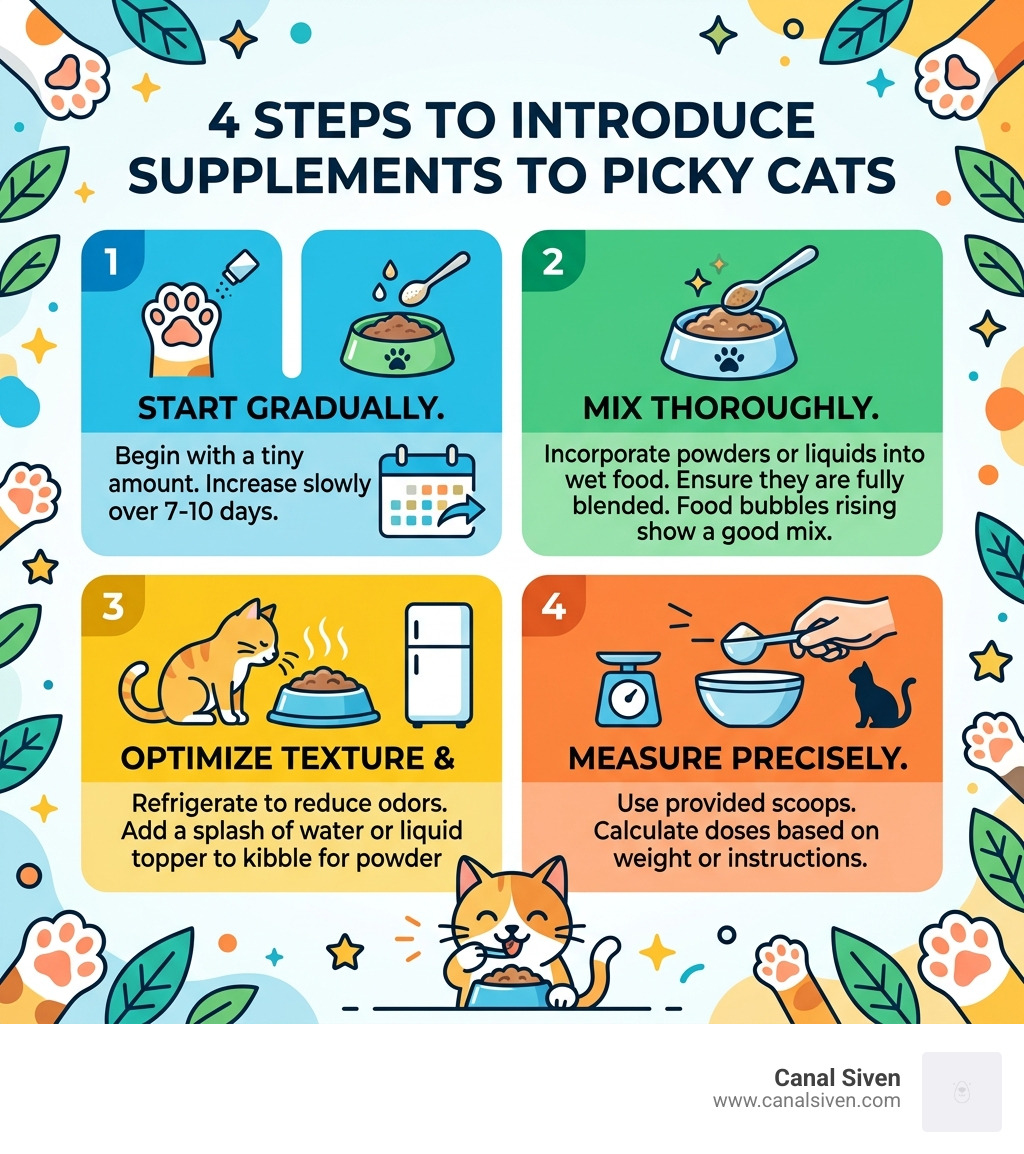
- The Gradual Intro: Don’t dump a full scoop of powder into their bowl on day one. Start with a tiny pinch and increase the amount over 7-10 days.
- Mixing and Textures: Powders are best mixed into wet food. If you feed kibble, a tiny bit of water or “liquid topper” can help the powder stick to the nuggets.
- Temperature Matters: Some supplements have a natural “amine” or sulfur smell (which can smell like ammonia or old fish). Refrigerating or even freezing the container can help dampen this odor.
- Precise Measuring: Use the scoops provided. Dosing is often based on the specific recipe (for homemade food) or the cat’s body weight. For example, a common dosage for wellness blends is 1/2 teaspoon for every 7-10 pounds of body weight.
Frequently Asked Questions about Cat Supplements
Are supplements necessary if I feed high-quality commercial food?
Generally, no. If your cat is healthy and eating a food labeled “Complete and Balanced” by AAFCO standards, they are getting what they need. However, supplements can still be used for targeted support, such as probiotics for a sensitive stomach or glucosamine for an aging Maine Coon.
Can I give my cat human vitamins or omega-3 capsules?
We strongly advise against this. Human supplements are formulated for a much larger body mass and different metabolic rates. For instance, too much Vitamin D can lead to kidney failure in cats. Always choose a product specifically labeled for felines.
How long does it take to see results from a nutritional supplement?
Patience is key! While some digestive aids like probiotics can show results in a few days, joint and skin supplements usually take 4 to 6 weeks of consistent use to show a visible difference in mobility or coat shine.
Conclusion
Navigating feline nutritional supplements in 2026 doesn’t have to be overwhelming. By focusing on essential nutrients like taurine, choosing NASC-certified products, and tailoring the approach to your cat’s specific life stage, you can significantly enhance their quality of life.
At Canal Siven, we believe that smart living extends to every member of your family—including the furry ones. Whether you are balancing a homemade meal or supporting a senior kitty, personalized nutrition is the greatest gift you can give.
Ready to optimize your pet’s health? More info about smart living services
Always remember: your veterinarian is your best partner in this journey. Before adding any new bottle to your pantry, a quick consultation ensures that your supplement choice is safe, effective, and perfectly suited for your cat’s nine lives.
