
Feeding the Beast with the Best Large Breed Cat Food
Why Large Breed Cat Food Is Worth Getting Right
Large breed cat food is not just regular cat food in a bigger bag. If you share your home with a Maine Coon, Ragdoll, or Norwegian Forest Cat, your cat has nutritional needs that standard formulas simply don’t cover.
Before diving into the details, here’s a quick answer to help you choose:
Top nutritional profiles for large breed cats in 2026:
| Food Type | Best For | Protein |
|---|---|---|
| Breed-Specific Formula | Targeted nutrition, joint & heart health | 29-31% |
| High-Protein Wild Recipe | Meat-first, ancestral diet | 85% animal ingredients |
| Grain-Free Large Kibble | Hypoallergenic, digestive health | 50%+ meat content |
| Premium Giant Formula | Structural support, gluten-free | 30.5% |
| High-Protein Maintenance | Budget-friendly muscle support | 35% |
What to look for in large breed cat food:
- High animal protein (30%+ minimum)
- Large kibble size to slow eating
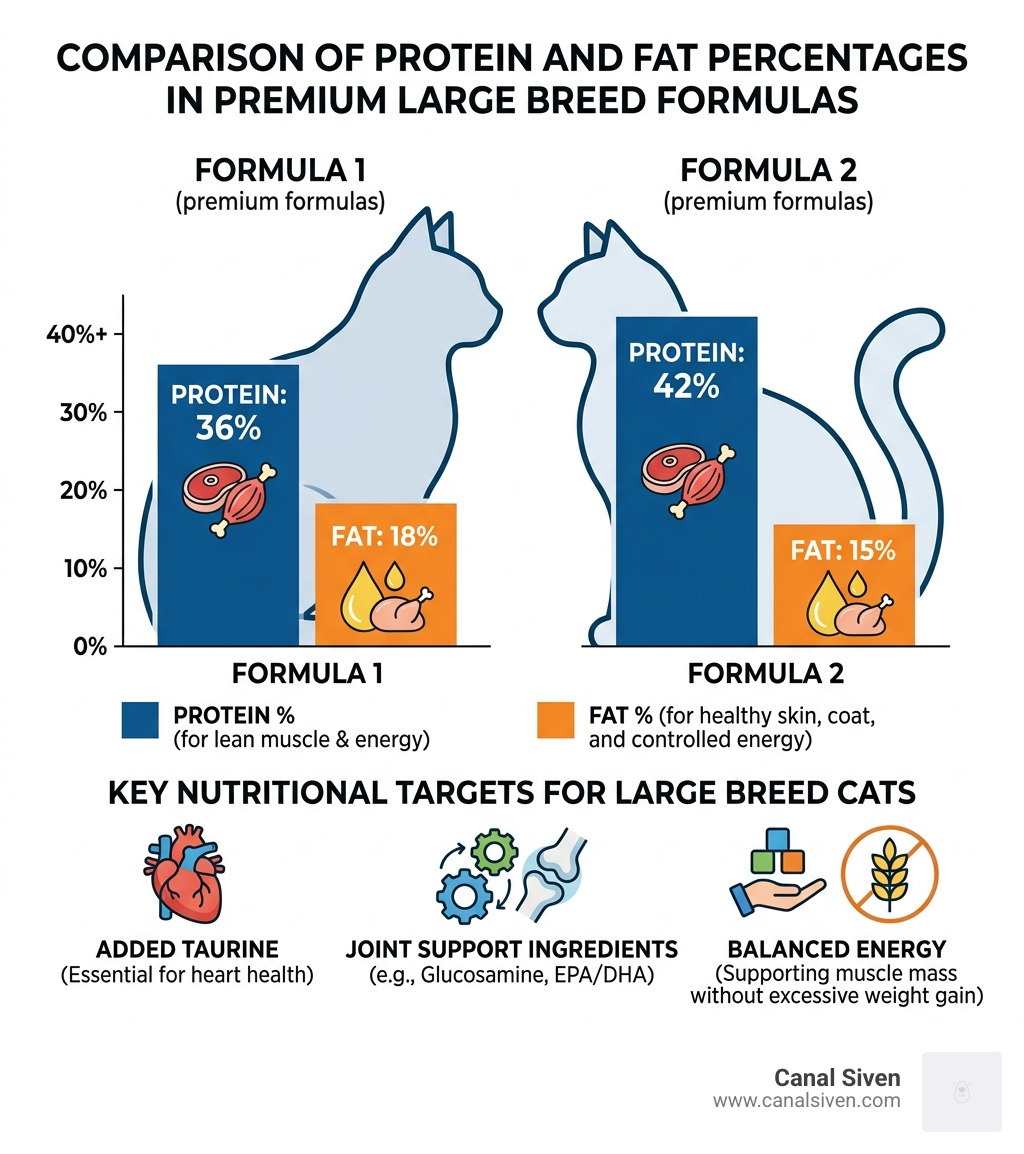
- Joint support ingredients (glucosamine, green-lipped mussel, EPA/DHA)
- Low in grains and fillers
- Added taurine for heart health
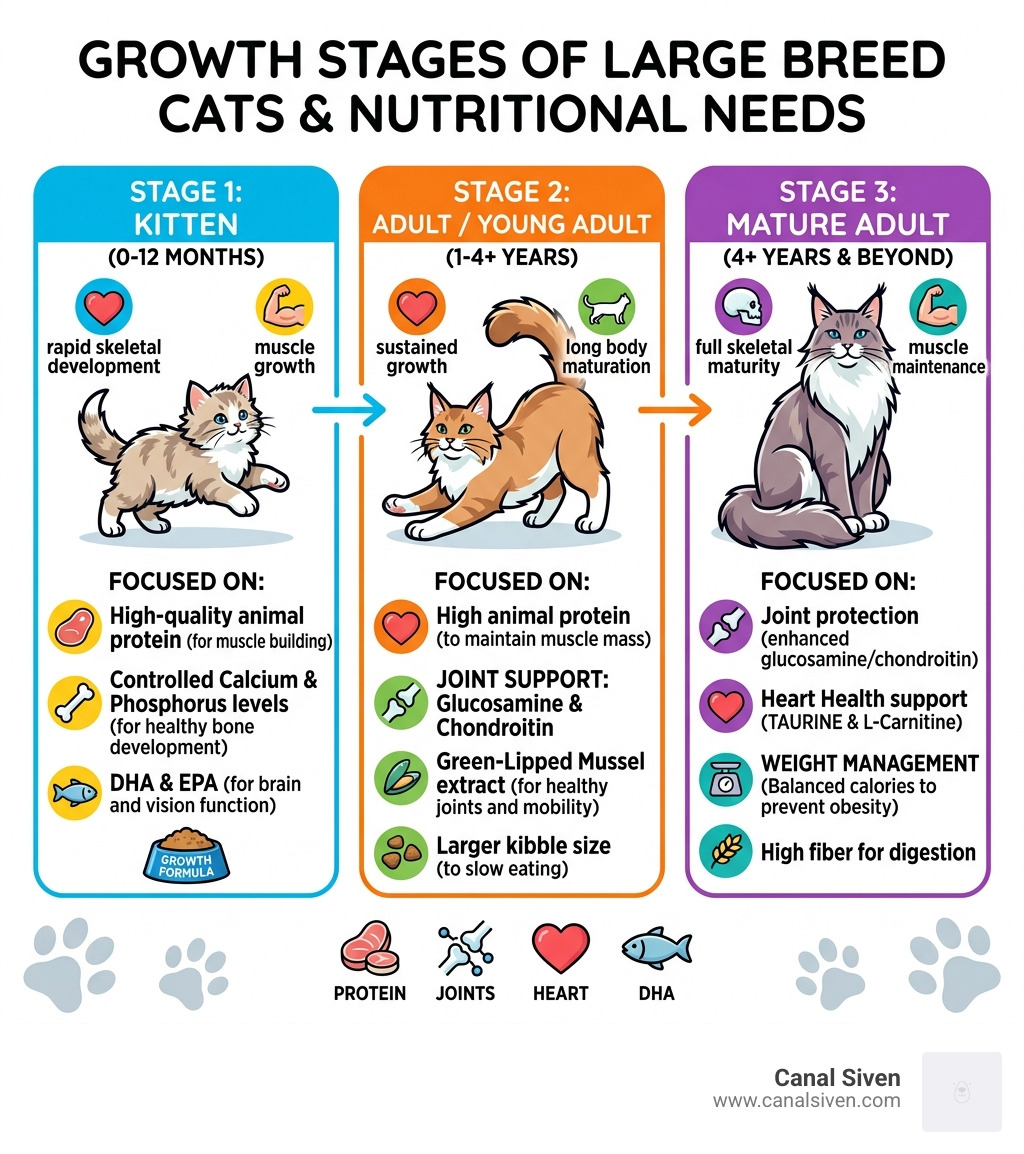
Large breed cats can weigh anywhere from 10 to 25+ pounds at full maturity. They grow slowly — Maine Coons, for example, don’t fully mature until around 3 to 5 years old. That extended growth window means their bodies need sustained, targeted nutrition for longer than most cat owners expect.
Their size puts extra stress on joints. Their big frames need more muscle support. And because they carry more body mass before looking overweight, obesity can sneak up on you.
The good news? The market for quality large breed cat food has improved significantly in recent years, and there are now some genuinely excellent options built specifically for big cats.
Here’s what you need to know to pick the right one.
Understanding the Giants: Breeds and Their Unique Needs
When we talk about “large breeds,” we aren’t just referring to a cat that’s had one too many treats. We are talking about the majestic “gentle giants” of the feline world. As of April 2026, breeds like the Maine Coon, Ragdoll, Norwegian Forest Cat, and American Bobtail continue to grow in popularity. These cats are fundamentally different from your average domestic shorthair.
A Maine Coon, for instance, can reach lengths of over 40 inches from nose to tail. Because of this massive physical stature, these cats have a prolonged growth phase. While a standard cat might be “finished” growing by 12 months, these giants are often still developing their skeletal structure and muscle mass well into their fourth or fifth year.
This slow maturation requires a high-quality nutritional profile. If we feed them food designed for a 7-pound cat, they may lack the caloric density and specific minerals needed to support their heavy bones. We must look for food that offers a balance of high energy—since moving a 20-pound body takes work—without triggering excessive fat gain.
Essential Nutrients in large breed cat food
Cats are obligate carnivores, meaning their bodies are biologically engineered to derive nutrients from animal tissue. For large breeds, this isn’t just a biological fact; it’s a structural necessity. Their large frames require significant lean muscle support to keep them mobile and healthy.
Metabolic rates in large breeds can be tricky. On one hand, they need plenty of fuel; on the other, they are often less “hyperactive” than smaller breeds, making weight management a top priority.
The Role of Protein in large breed cat food
Protein is the building block of muscle. For a large breed cat, we recommend a 35% protein minimum in dry formulations. However, it’s not just the amount of protein that matters, but the source. Animal-based proteins like chicken, turkey, beef, and wild-caught fish provide the essential amino acids that plant proteins simply cannot match.
Specifically, taurine is vital. Cats cannot produce enough taurine on their own, and in large breeds, it is essential for maintaining a healthy heart. High-protein formulations deliver 35% protein—about 20% more than standard maintenance diets—to ensure these big cats have the energy they need for their active lifestyles.
Why Size Matters: Selecting large breed cat food Kibble
Have you ever watched a Maine Coon eat? Their jaws are significantly larger and more powerful than a typical cat’s. Standard kibble is often so small that large cats simply swallow it whole without chewing. This “gulping” can lead to digestive upset and deprives them of the mechanical teeth-cleaning benefits of chewing.

Specific large breed cat food designed for larger frames features “king-size” or cube-shaped kibble. This design forces the cat to crunch through the food. This not only slows down their eating—preventing regurgitation—but also helps reduce tartar buildup on their large teeth.
Key Ingredients for Joint and Heart Health
The bigger the cat, the harder the fall-or in this case, the harder the impact on the joints. Large breeds are genetically predisposed to certain health issues, such as hip dysplasia and hypertrophic cardiomyopathy (HCM). For a general overview of HCM in cats, the Wikipedia article on feline hypertrophic cardiomyopathy offers helpful background.
To mitigate these risks, specialized feline formulations often include:
- Glucosamine and Chondroitin: These are the gold standard for cartilage repair and joint lubrication.
- Green-Lipped Mussel: A natural source of glycosaminoglycans that acts as a powerful anti-inflammatory.
- EPA and DHA: These Omega-3 fatty acids support both cardiac function and joint mobility.
Premium large breed recipes specifically enrich their formulas with these nutrients to support the solid bone structure these cats carry.
Omega Fatty Acids for Skin and Coat
If you own a Norwegian Forest Cat or a Ragdoll, you know the struggle of the “shaggy coat.” These cats have dense, multi-layered fur that requires internal support to stay mat-free and shiny.
Omega-3 and Omega-6 fatty acids play a dual role here. Beyond their anti-inflammatory properties for joints, they strengthen the skin barrier. EPA and DHA from fish oils are particularly effective at maintaining that “show-cat” shine while reducing skin sensitivities.
Feeding Strategies: Commercial vs. Homemade Options
Choosing between commercial and homemade food is a big decision for any “beast” owner.
Commercial Options: High-end commercial brands focusing on meat-first recipes contain up to 85% quality animal ingredients, mimicking a “WholePrey” diet by including organs and bone. This provides a balanced mineral profile without the guesswork.
Wet Food Benefits: We often recommend a mix of wet and dry food. Wet food provides essential hydration, which is crucial since many large cats are prone to urinary issues. It also allows for easier portion control, as the high moisture content helps the cat feel full on fewer calories.
Homemade Options: If you choose to go the homemade route, you must be incredibly diligent. Large cats have very specific mineral requirements (like calcium-to-phosphorus ratios) that are hard to hit with just “chicken and rice.”
| Essential Vitamins for Homemade Fortification | Purpose |
|---|---|
| Vitamin A | Vision and skin regeneration |
| Vitamin D | Bone health and calcium absorption |
| Vitamin E | Antioxidant and cell protection |
| Taurine | Heart and vision health |
For those taking the DIY path, using a specialized feline supplement can help ensure the meal is nutritionally complete. However, always consult a board-certified veterinary nutritionist before switching to a 100% homemade diet.
Transitioning and Monitoring Health
Never switch your cat’s food overnight. Large cats can have sensitive stomachs, and a sudden change can lead to a week of digestive “surprises.”
- Days 1-3: 25% new food, 75% old food.
- Days 4-6: 50% new food, 50% old food.
- Days 7-9: 75% new food, 25% old food.
- Day 10: 100% new food.
Monitor your cat for coat shine, energy levels, and stool quality. A healthy cat on the right large breed cat food should have firm stools, a bright temperament, and a coat that doesn’t feel greasy or brittle.
Common Concerns for Owners of Big Cats
How do I prevent obesity in my large breed cat?
Obesity is the number one health threat for large cats. Because they are naturally big, many owners don’t realize their cat is overweight until they are morbidly obese. We recommend using a gram scale for portioning rather than a measuring cup. Follow the manufacturer’s guidelines—for example, a 10kg (22lb) cat typically needs around 79-99g of high-quality dry food per day, depending on activity level.
Is a grain-free diet necessary for large cats?
While not every cat needs to be grain-free, many large breed owners prefer it. Grains are often used as cheap fillers that add “empty” carbohydrates. Since large cats are already prone to weight gain, a grain-free or low-carb diet helps keep them lean while focusing their calorie intake on protein and healthy fats.
When should I switch from kitten to adult large breed food?
Because large breeds grow so slowly, many veterinarians recommend keeping them on a “kitten” or “growth” formula longer than standard cats—sometimes up to 18-24 months. However, once they reach their structural height, switching to a dedicated large breed cat food helps prevent them from becoming “wide” instead of just “big.”
Conclusion
Feeding a large breed cat is a commitment to their long-term wellness. These magnificent animals bring so much joy (and fur) into our lives, and the least we can do is provide them with the fuel their massive frames require. By focusing on high-protein, joint-supporting, and appropriately sized kibble, you aren’t just feeding a pet—you’re protecting a family member.
At Canal Siven, we believe that smart living starts with the health of your household, including your four-legged giants. Tailored nutrition is an investment that pays off in fewer vet visits and more years of head-butts and purrs.
For more expert insights on feline wellness and financial planning for your pet’s future, visit our cat nutrition services.
