
Raw and Fresh Cat Food Diets Explained
Why a Cat Fresh Food Diet Could Transform Your Cat’s Health
A cat fresh food diet means feeding your cat minimally processed, high-moisture meals made from real meat — and it’s one of the fastest-growing shifts in pet nutrition right now.
Here’s a quick summary of what you need to know:
| Topic | Key Facts |
|---|---|
| What it is | Gently cooked or raw meals made from real animal proteins |
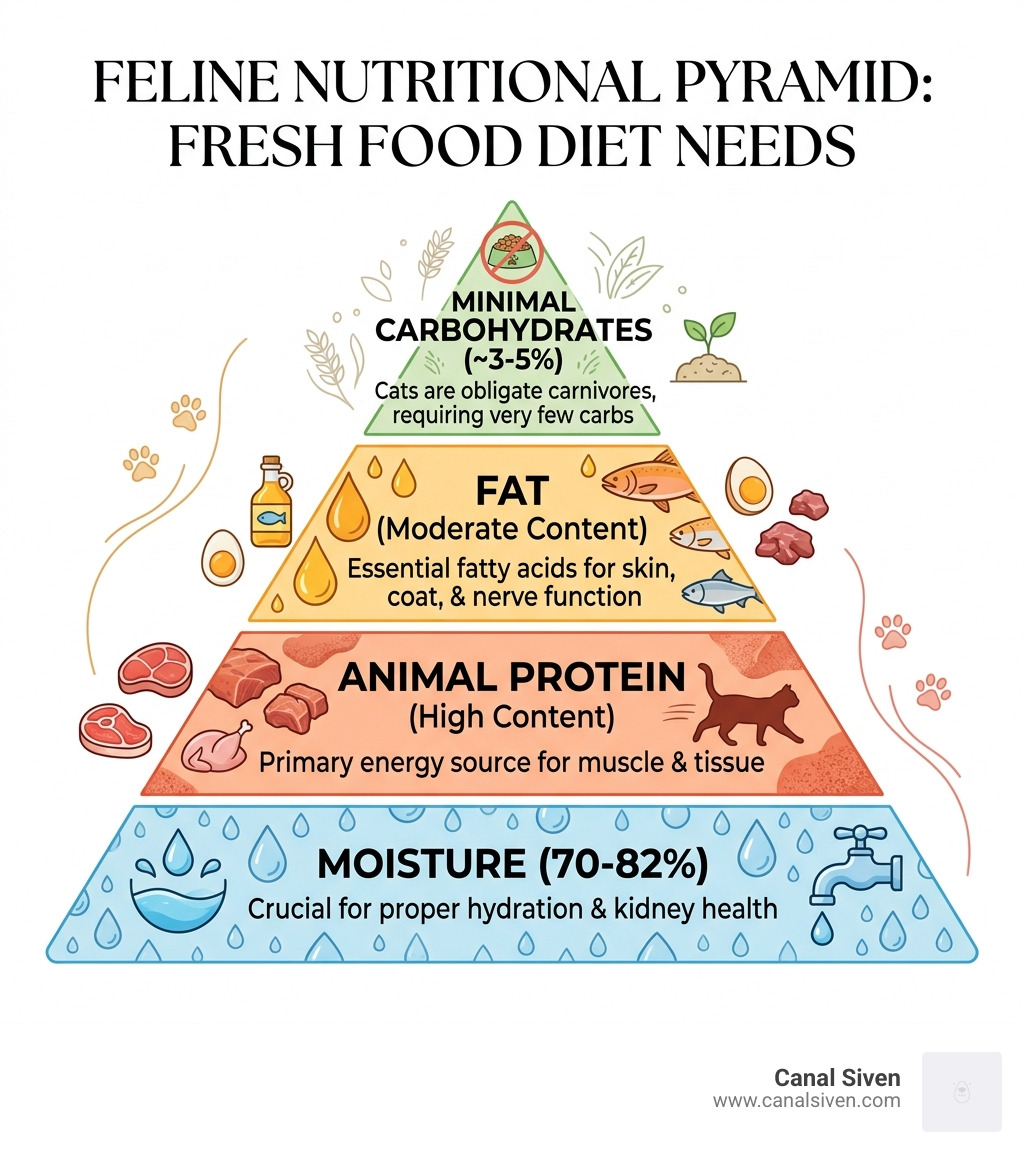
| Moisture content | 70-82%, vs. 8-12% in dry kibble |
| Carbohydrates | ~3-5%, vs. 35-50% in kibble |
| Average daily cost | $3.50-$4.50/day |
| Main benefit | Better hydration, digestion, and protein bioavailability |
| Key consideration | Must be nutritionally complete (AAFCO-compliant) |
Cats are obligate carnivores. That means their bodies are built to run on animal protein and fat — not grains, starches, or fillers. Yet most cats today eat ultra-processed kibble that is far removed from what their biology actually needs.
The fresh pet food market crossed $500 million in 2025 — and that growth is driven by cat owners who are asking harder questions about what’s actually in the bowl.
This guide breaks down exactly what fresh cat food is, whether it’s worth it, and how to do it safely.
Understanding the Cat Fresh Food Diet and Its Alternatives
When we talk about a cat fresh food diet, we aren’t just talking about “wet food” in a different package. Fresh food represents a fundamental shift in how ingredients are sourced and prepared. Unlike traditional pet food, which is often treated like a shelf-stable industrial product, fresh food is treated like, well, food.
Defining a Cat Fresh Food Diet
A fresh diet typically consists of high-quality animal proteins that have been gently cooked at lower temperatures. This “gentle cooking” or pasteurization is key; it’s hot enough to kill off harmful bacteria like Salmonella but cool enough to keep the delicate vitamins, minerals, and amino acids intact.
Most fresh cat foods are “human-grade.” According to AAFCO standards, this means every ingredient in the bag is legally suitable for human consumption and the food is prepared in USDA-inspected facilities. You won’t find “meat meals” or “animal by-products” here—just real muscle meat, organ meat, and occasionally a small amount of antioxidant-rich vegetables.
Fresh vs. Raw: Key Differences
While “fresh” usually implies cooked, “raw” diets take a different path. A raw diet consists of uncooked muscle meat, organ meat, and ground bone. Proponents of the BARF diet (Biologically Appropriate Raw Foods) argue that this is the closest we can get to a cat’s ancestral diet.
The main trade-off is safety. Raw food preserves 100% of natural enzymes but carries a higher risk of bacterial contamination. Gently cooked fresh food offers a middle ground: it provides the bioavailable nutrients cats crave while eliminating the pathogens that worry many veterinarians. For a deeper dive into the science, the Cornell Feline Health Center provides excellent resources on feline nutrition requirements.
The Problem with Ultra-Processed Kibble
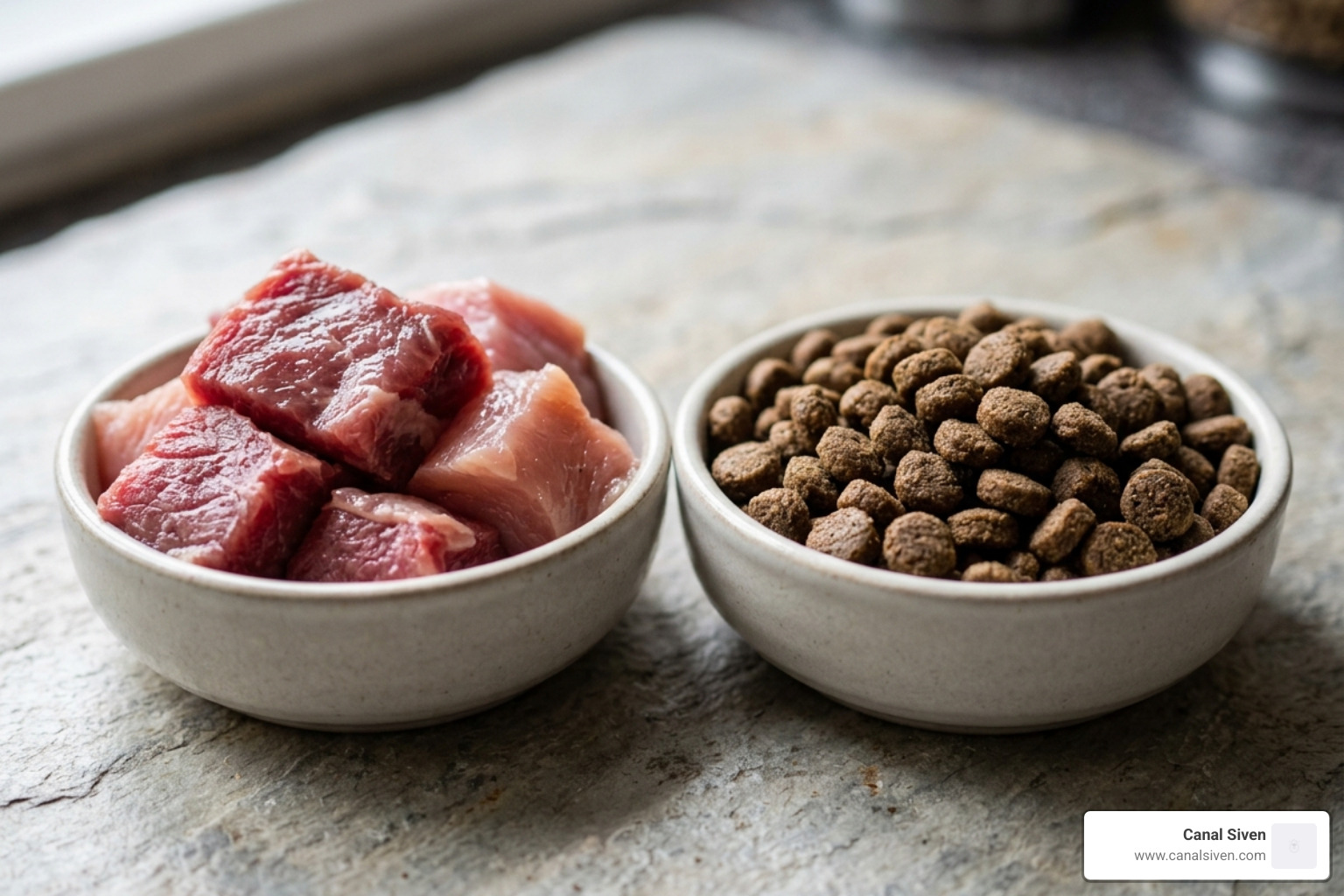
To understand why fresh food is winning, we have to look at what it’s replacing. Most dry kibble is produced using “extrusion,” a process where ingredients are blasted with heat exceeding 300°F. This high-heat processing destroys many natural nutrients, which manufacturers then have to add back in using synthetic sprays.
Furthermore, kibble requires “binders”—usually starches like corn, wheat, or peas—to keep those little nuggets from crumbling. This results in a diet containing 35-50% carbohydrates. Since cats lack the enzymes to efficiently process high amounts of sugar and starch, this can lead to obesity and insulin issues over time.
| Feature | Fresh Food | Raw Food | Wet (Canned) | Dry Kibble |
|---|---|---|---|---|
| Processing | Gently Cooked | Uncooked | High-Heat Retort | Extruded |
| Moisture | 70–82% | 70–80% | 75–82% | 8–12% |
| Storage | Fridge/Freezer | Freezer | Shelf-stable | Shelf-stable |
| Carbs | 3–5% | 0–3% | 5–10% | 35–50% |
The Health Benefits of Fresh Nutrition for Obligate Carnivores
We often see a “glow up” in cats that switch to a cat fresh food diet. Because the protein is less processed, it is more “bioavailable,” meaning the cat’s body can actually use more of what it eats.

Supporting Hydration and Digestion with a Cat Fresh Food Diet
Cats evolved from desert dwellers. In the wild, they don’t drink much water; they get their hydration from their prey, which is about 70-75% water. Dry kibble, at only 10% moisture, leaves cats in a state of chronic mild dehydration. This can lead to urinary crystals and kidney stress.
Fresh food naturally mirrors the moisture levels of prey (70-82%). This high water content supports kidney health and makes digestion much easier. Owners often notice that fresh-fed cats have smaller, less smelly stools because they are absorbing more of the nutrients and producing less waste.
Why Human-Grade Ingredients Matter for Longevity
The “human-grade” label isn’t just marketing fluff—it’s about accountability. Traditional “feed-grade” cat food can legally include “4D” meat (Dead, Dying, Diseased, or Disabled animals). By choosing human-grade fresh food, you are ensuring the protein comes from the same supply chain that feeds people. This transparency reduces the risk of toxins and ensures your cat is getting high-quality amino acids like taurine, which is essential for feline heart and eye health.
Safety, Risks, and Veterinary Perspectives on Raw Feeding
While we love the benefits of fresh food, we have to talk about the “R” word: Raw. Feeding raw meat is a polarizing topic in the veterinary world, and for good reason.
Nutritional Completeness and Balancing Homemade Meals
One of the biggest risks isn’t actually bacteria—it’s malnutrition. Many well-meaning owners try to make a “fresh” diet at home by just feeding chicken breast. This is dangerous. A cat needs a precise balance of calcium (from bone), taurine (from heart/muscle), and vitamins.
Without a “complete and balanced” recipe, cats can develop thiamine deficiencies or skeletal issues. If you are going the DIY route, we always recommend using a supplement like Balance It® or consulting a board-certified veterinary nutritionist to ensure your recipe meets AAFCO standards.
Veterinary Consensus on Fresh vs. Raw Diets
Most major organizations—including the AVMA, FDA, and CDC—officially discourage raw diets. The FDA guidelines on raw pet food safety highlight that raw meat can harbor Salmonella and Listeria.
These pathogens aren’t just a risk to your cat; they are a risk to you. Cats can “shed” these bacteria in their feces or saliva, which is a major concern for households with children, seniors, or anyone immunocompromised. This is why many vets prefer “fresh” (gently cooked) diets over “raw”—you get the whole-food benefits without the public health gamble.
Practical Guide: Cost, Transitioning, and Preparation
Switching to a cat fresh food diet is an investment in your cat’s future, but we know it requires a bit more planning than just dumping a bag of kibble into a bowl.
Financial Breakdown of a Cat Fresh Food Diet
Let’s be honest: fresh food costs more than the bargain bin kibble. In 2026, the average cost for a 10lb cat on a 100% fresh diet ranges from $3.50 to $4.50 per day.
If that feels steep, we recommend the 50/50 method. By replacing just half of your cat’s daily kibble with fresh food, you can provide the hydration and protein benefits while bringing your monthly spend down to about $55–$65. It’s a “smart living” compromise that still yields a significant health “glow up.”
How to Safely Transition Your Cat to Fresh Food
Cats are notoriously “neophobic”—they are suspicious of new things, especially new smells and textures. If you switch their food “cold turkey,” you’re likely to end up with a full bowl and a grumpy cat.
We suggest a 7-day plan:
- Days 1-2: 25% fresh food, 75% old food.
- Days 3-4: 50% fresh, 50% old.
- Days 5-6: 75% fresh, 25% old.
- Day 7: 100% fresh.
Pro Tip for Picky Eaters: Cats hunt by scent. Fresh food from the fridge doesn’t smell like much. Try warming it to body temperature (about 95°F) to release the aromas. You can also sprinkle a tiny bit of their old kibble or some “treat dust” on top to bridge the gap.
Frequently Asked Questions about Fresh Cat Food
Is fresh cat food suitable for kittens and seniors?
Absolutely. For kittens, fresh food provides the high-quality protein and fats needed for rapid growth. Just ensure the package says “formulated for all life stages” or “kitten growth.” For seniors, the high moisture content is a lifesaver for aging kidneys, and the soft texture is much easier on cats with dental issues.
How long does fresh food last in the refrigerator?
Once thawed, fresh cat food generally stays good for 3 to 4 days in the fridge. We recommend moving a pouch from the freezer to the fridge 24 hours before you need it. Never refreeze thawed food, as it ruins the texture and can degrade the nutrients.
Can I mix fresh food with my cat’s current kibble?
Yes! As mentioned in our 50/50 method, mixing is a great way to boost nutrition on a budget. Just be sure to calculate the calories. Fresh food is often more calorie-dense than wet food (about 100-120 kcal per 3oz), so you’ll need to feed slightly less total volume to keep your cat at a healthy weight.
Conclusion
At Canal Siven, we believe that smart living extends to every member of your family—including the ones with whiskers. Transitioning to a cat fresh food diet isn’t just a trend; it’s a return to the biological basics that allow cats to thrive.
Whether you choose to go 100% fresh or start with a hybrid approach, the goal is the same: fewer fillers, better hydration, and a longer, more vibrant life for your feline companion. For more tailored advice on choosing the right path for your pet, explore our pet nutrition services to find the perfect fit for your home.
